
Common Wildlife Found in Attics in Arkansas
You hear scratching, scurrying, or thumping above your ceiling at night. Something has moved into your attic. But what is it?
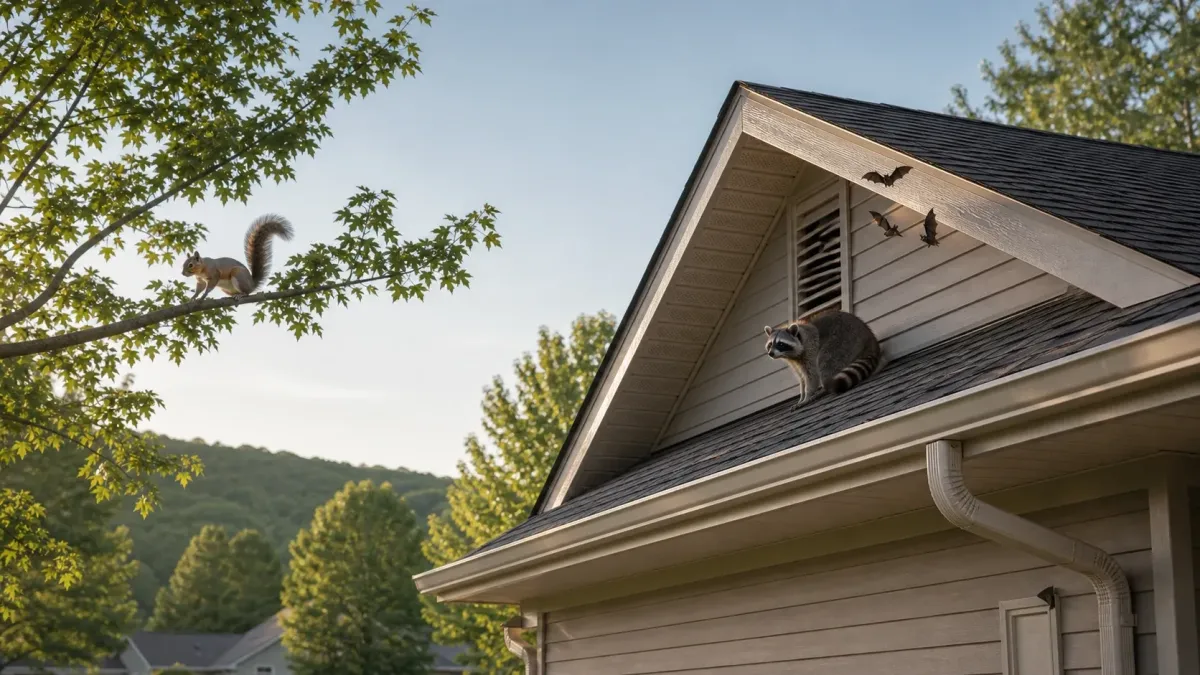
In Arkansas, the answer is usually one of three animals. The wildlife most commonly found in attics in Arkansas is squirrels, raccoons, and bats. Each one leaves different clues.
In this guide, we cover the top attic invaders, the signs each one leaves, why older homes are at risk, and what to do. We see these attic calls every week across Rogers and Bentonville.
|
Quick Answer: What wildlife lives in Arkansas attics? Squirrels, raccoons, and bats are the animals we find in attics the most. Older homes in Rogers and Bentonville are especially at risk because of:
Hear something up there? Request your free inspection. |
The Top 3 Attic Invaders in Arkansas
Here is how to tell the three apart by when they are active and the clues they leave.
| Animal | When Active / Signs | Why They Pick Attics |
|---|---|---|
| Squirrels | Daytime; fast scampering, gnawing sounds | Warm, dry nest spot up high |
| Raccoons | Night; heavy thumps, loud sounds, big droppings | Safe den for mothers and babies |
| Bats | Dusk and night; squeaking, droppings, musky smell | Tight, warm space to roost in groups |
Knowing which animal you have matters, because each one needs a different plan. A squirrel job is not the same as a bat job. That is why the first step is always a good look in the attic.
Squirrels in the Attic
Squirrels are the most common attic animal in our area. You will hear them during the day, since they are active when the sun is up. They chew to get in and to keep their teeth short.
- Fast, light scampering across the ceiling
- Gnawing or scratching on wood
- Small piles of droppings and chewed insulation
Squirrels do the most damage with their teeth. They chew wood, wires, and pipes to keep their front teeth short. Chewed wires in an attic are a real fire risk, so squirrels are far more than just a noise problem.
Squirrels are rodents, so our rodent control uses trapping plus chew-proof sealing to keep them from chewing back in.
Raccoons in the Attic
Raccoons are big and strong. They can tear open soffits, vents, and even roof shingles to get inside. They often move in during spring to have their babies, which makes removal trickier.
- Heavy, slow thumping sounds, mostly at night
- Large droppings and torn vents or insulation
- Chittering or crying sounds from babies in spring
Raccoons are also messy. They often pick one spot as a bathroom, and the droppings pile up over time. It is best to let a pro handle that cleanup, since raccoon waste can carry germs.
Because a mother may have young hidden in the attic, raccoons need careful, humane removal. See our wildlife control in Rogers, AR.
Bats in the Attic
Bats love tight, warm attic spaces and roost in groups. They are protected by state and federal law, so they need special care and good timing.
- Timing: In maternity season (about May through August), removal must wait so pups are not trapped.
- Signs: Look for droppings (guano), a musky smell, or squeaking at dusk.
Bat droppings, called guano, build up fast under a roost. Over time that pile can stain ceilings and push a strong, musky smell through the whole house.
Birds can also nest in attic vents and gaps. If that is your problem instead, our bird control can help.
Why Older Rogers and Bentonville Homes Are Most at Risk
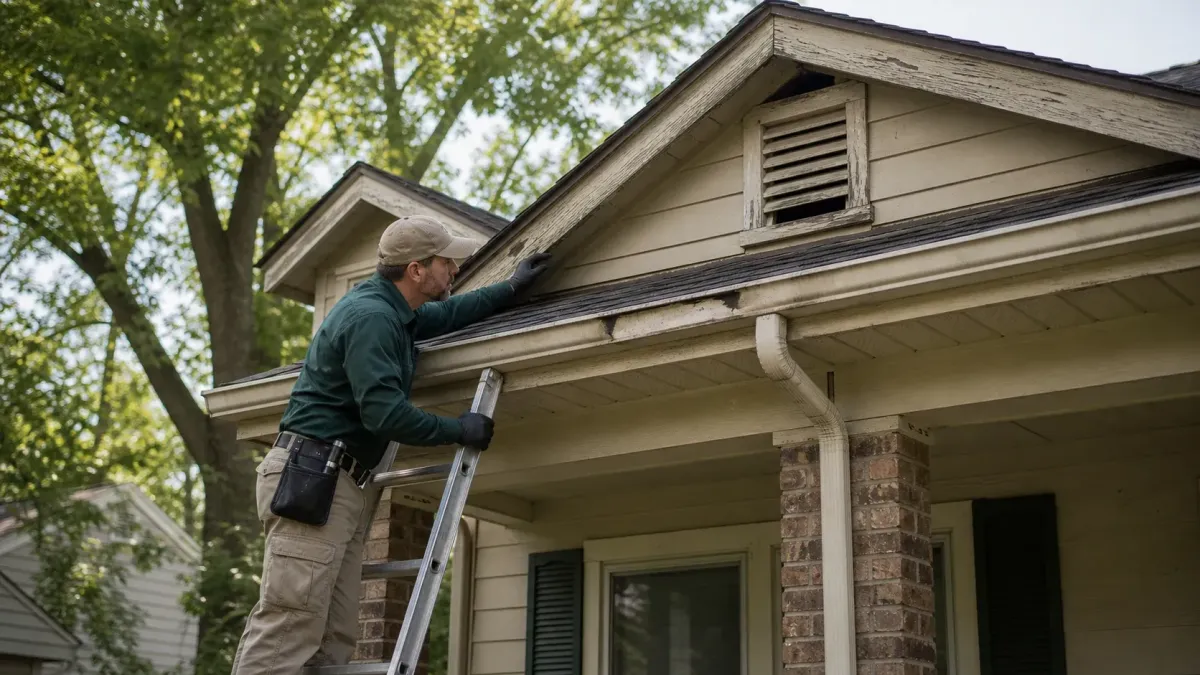
Older homes have had more time to wear down. Over the years, small gaps open up where animals can slip in:
- Spaces where the roof meets the soffit
- Ridge vent material that has dried out and cracked
- Loose fascia boards and lifted shingles
- Uncapped chimneys and open gable vents
Most homeowners never spot these gaps from the ground. A pro inspection finds them fast.
What Damage Can Attic Wildlife Cause?
Animals in the attic are not just noisy. Left alone, they can do real harm to your home:
- Chewed wires that raise the risk of a fire
- Torn or flattened insulation, which raises energy bills
- Droppings and urine that stain ceilings and smell
- Holes that let in rain, bugs, and even more animals
The damage adds up the longer they stay, so early action saves money.
How Do Pros Get Attic Wildlife Out?
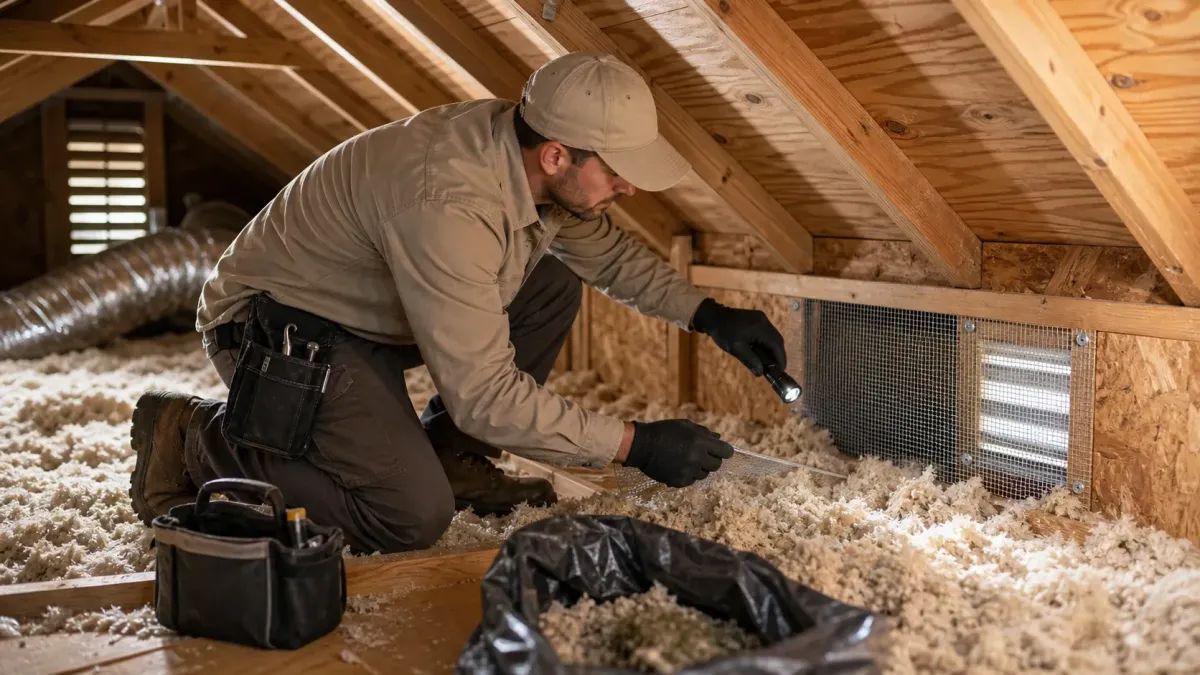
Clearing an attic is a step-by-step job, not a one-time trap. Here is how a pro handles it:
- Inspect the attic and roof to find the animal and every entry point
- Remove the animal safely, checking for hidden babies
- Use one-way doors for bats so they leave but cannot return
- Seal all gaps with strong, animal-proof material
- Clean up droppings and replace damaged insulation
This full process is what keeps the attic empty for good.
Can You Remove Attic Wildlife Yourself?
It is best not to. Some attic animals are dangerous to handle, and bats are protected by law. The biggest risk is sealing the attic while an animal — or its babies — is still inside.
- You could trap young animals and cause a bad smell
- You might get bitten or scratched
- You can break state law with protected animals like bats
- You may miss the real entry point and waste your work
A pro removes the animal, checks for young, and seals the gaps the right way. That saves you time, money, and risk.
Signs You Have Attic Wildlife — and What to Do
Not sure what is up there? Watch for these signs:
- Noises at night or early morning
- Droppings, stains, or a bad smell
- Torn insulation, vents, or screens
- Greasy marks or chew holes near the roofline
Call or text Network Pest Control at (479) 888-4249, contact us online, or request your free inspection to find out what you have.
Network Pest Control
11205 Meadow Lark Rd. Rogers AR 72756
479.888.4249