
⭐⭐⭐⭐⭐ 5.0 Rated by Northwest Arkansas Homeowners
Wildlife Control | Kathleen Johnson Memorial Park
Lowell AR
Wildlife showing up near the park in Lowell, AR? We serve Windmill Farms, Shiloh Road, and all surrounding areas. Humane removal, AGFC-compliant methods.
✅ +521 Happy Customers
✅ Same-week appointments
✅ Serving Rogers, Northwest Arkansas & Southern Missouri
✅ +521 Happy Customers
✅ Same-week appointments
✅ Serving Rogers, Northwest Arkansas & Southern Missouri


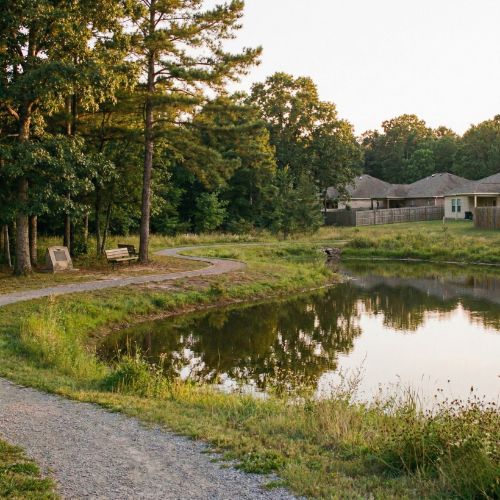
Kathleen Johnson Memorial Park sits in the heart of Lowell, AR — and the green space it provides attracts wildlife every season of the year. This page covers wildlife removal and pest control for homes and properties near the park and the surrounding Lowell neighborhoods.
Being close to the park's wooded edges, retention ponds, and trail corridors raises your chances of an animal getting into your home. Streets bordering the park see more raccoon, skunk, and squirrel activity than areas farther from the greenway.
Older soffits, crawl spaces, and fence gaps are the most common ways animals find their way inside homes near wildlife control Kathleen Johnson Memorial Park Lowell searches.
Wildlife Activity Around Kathleen Johnson Memorial Park Is Higher Than Most Lowell Residents Expect
The park borders residential streets on multiple sides. Animals move freely between the green space and nearby yards without much stopping them. Kathleen Johnson Memorial Park includes open lawn, tree cover, and drainage features that give wildlife a place to shelter overnight — right next to your neighborhood, as covered in the park's trail corridors and greenway connections.
Raccoons, opossums, skunks, and groundhogs are regularly spotted along the park edges and the Rogers Road corridor. Residents in the Windmill Farms and Shiloh Road areas also report increased animal sightings tied to overflow from the park. Seasonal spikes happen in spring when animals are nesting and again in fall when they search for warm shelter before winter.
The nearby Beaver Lake watershed adds another layer of wildlife pressure for northwest Benton County properties. That combination of park green space and watershed drainage makes this part of Lowell one of the more active areas in the region for nuisance animal calls.
Common Animals Entering Homes on the Streets Closest to the Park
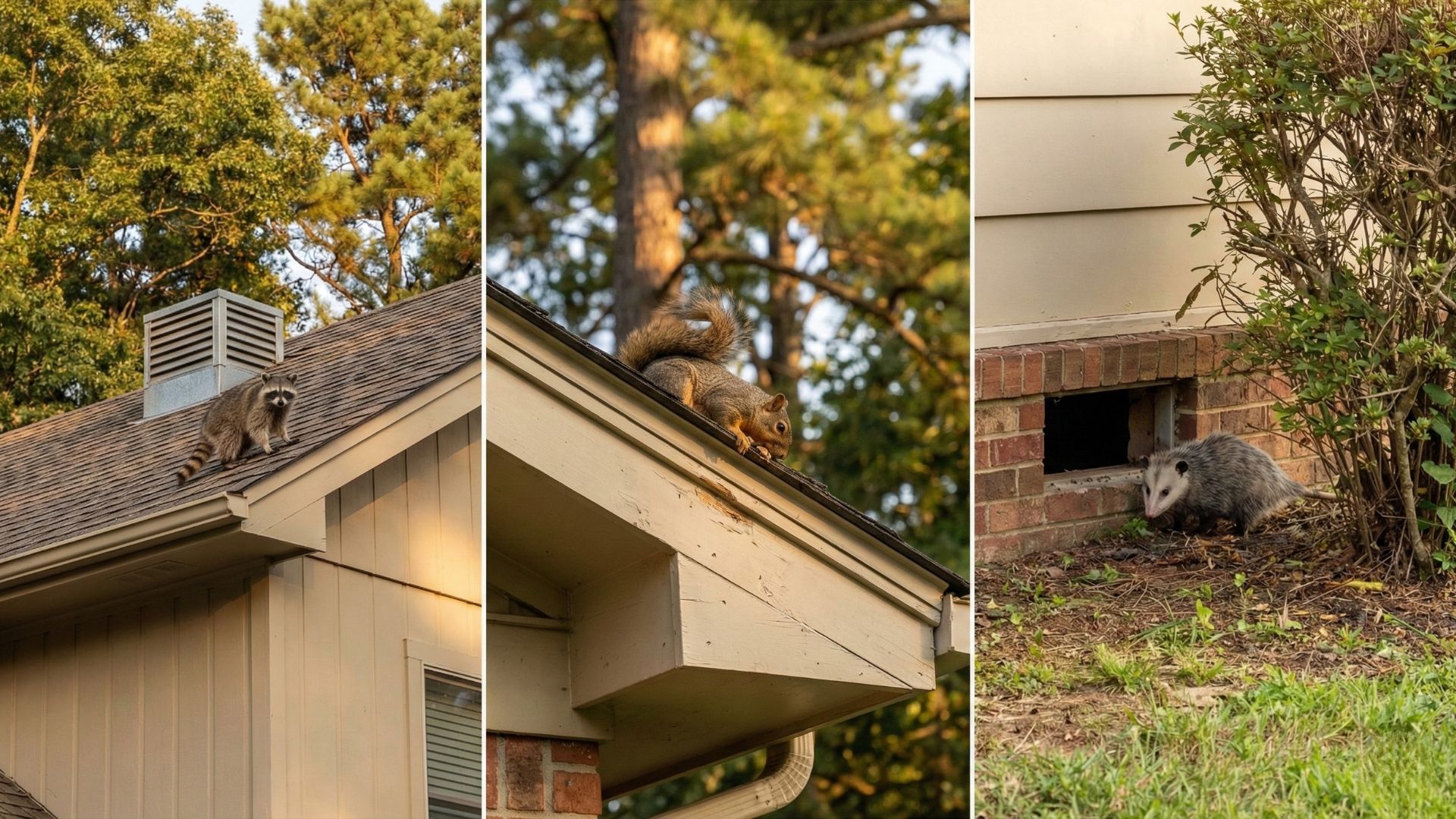
Several species show up repeatedly on the blocks directly surrounding the park. Knowing which animal you're dealing with helps us respond faster and with the right method.
Raccoons access rooflines and attic vents. They are most active on blocks directly north and west of the park.
Squirrels chew through wooden fascia boards. Older ranch-style homes near the park are especially vulnerable to this type of damage.
Skunks burrow under decks and HVAC pads. A strong odor near your crawl space vents is usually the first sign.
Opossums nest in low-clearance crawl spaces. They travel frequently along fence lines that connect the park to nearby subdivisions.
Groundhogs tunnel under concrete slabs and garage foundations. They are more active near the quieter south end of the park.
Bats enter through small gaps near rooflines. Lowell's older tree canopy near the park supports large local bat colonies.
If you're seeing any of these animals — or finding damage you can't explain — getting an inspection scheduled quickly matters. Animals do not leave on their own once they've found a way in.
How Lowell's Home Styles Near the Park Create Entry Points for Wildlife
Many homes within a half-mile of the park were built in the 1990s through the early 2000s. Wood soffits and older unscreened vents are common in that construction era — and both are easy targets for wildlife.
Crawl space homes on sloped lots, which are common near Shiloh Road, leave low gaps that skunks and opossums target regularly. Fence lines that back up to park-side tree lines create direct animal pathways straight to your attic or garage. Unscreened ridge vents are among the most frequent squirrel and bat entry points we find in this corridor.
Retention ponds in newer sections off Goad Springs Road bring muskrat and beaver activity closer to residential lots in that area, and properties backing up to those drainage features may need rodent control near Lowell in addition to standard wildlife services. If your home backs up to any of those drainage features, your risk level is higher than average. Some HOA-governed communities near Highway 49 also restrict certain trapping methods — check with your HOA before removal begins so there are no delays.
What Happens During a Wildlife Control Visit in This Part of Lowell
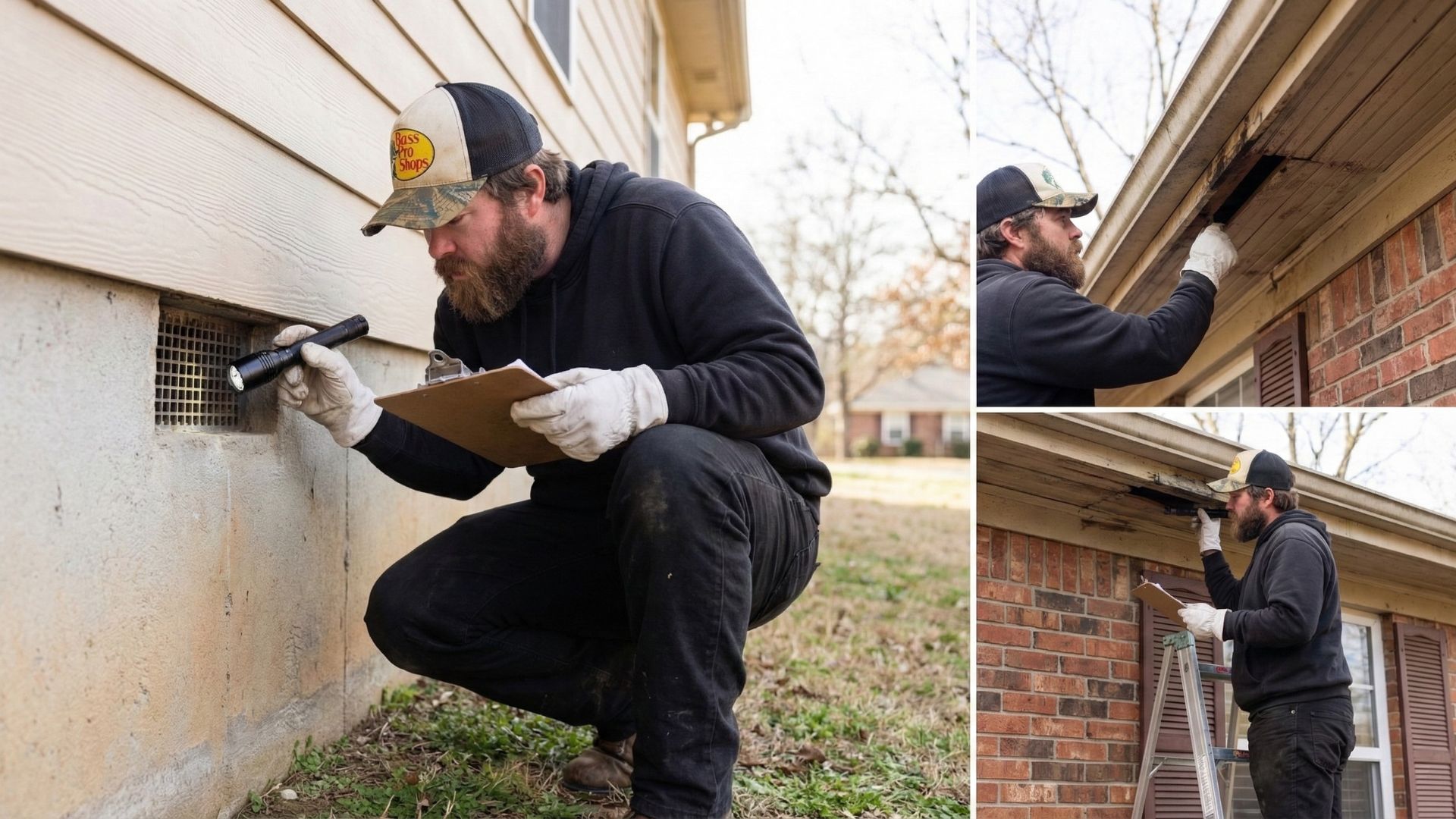
Our inspection covers your full exterior roofline, foundation gaps, crawl space vents, and any visible trail or burrow activity on your property. We identify the species involved, the active entry points, and any secondary access risks specific to your home.
From there, we place humane traps or install exclusion materials based on the animal type and local ordinance requirements. A return visit is scheduled to confirm the animal has been removed and to seal entry points permanently. Properties near the park may need follow-up checks during peak spring nesting season when animal pressure is highest.
We serve homes throughout Lowell, including areas near Pinnacle Hills Pkwy and the I-49 frontage corridor. If you're ready to get a technician out, schedule our humane wildlife removal process in Lowell, AR today.
Rules and Permits That Apply to Wildlife Removal in Lowell, AR
The Arkansas Game & Fish Commission (AGFC) regulates the trapping and relocation of most nuisance wildlife species in the state. Some species — including bats and migratory birds — carry federal protections, so removal timing and method must follow AGFC guidelines closely.
Lowell falls within Benton County. No additional city-level trapping permit is currently required for standard nuisance species in this area. HOA-governed communities near the park may have landscaping or baiting restrictions, so confirm with your HOA before booking if you live in one of those subdivisions.
One rule that surprises many homeowners: trapped animals cannot simply be released back at the park. State relocation rules set distance requirements that must be followed. Our technicians know these rules and handle all removal in full compliance.
How to Reach Us and Get to Our Service Area Near the Park
Kathleen Johnson Memorial Park is located off Monroe Avenue in Lowell, AR 72745.
From I-49 North: Take Exit 86 toward Lowell/Rogers. Head west on Monroe Ave. The park is approximately 1 mile from the exit. Our service area covers all streets surrounding the park, plus the Windmill Farms neighborhood, the Goad Springs Road corridor, and Shiloh Road subdivisions.
We also serve Rogers, Bentonville, and pest control in Springdale properties within 15 minutes of the park.
Booking is available online or by phone. Same-day response is prioritized for active intrusion calls in this zip code. Reach out now to check availability in the Lowell park area.
Our Wildlife Removal Process
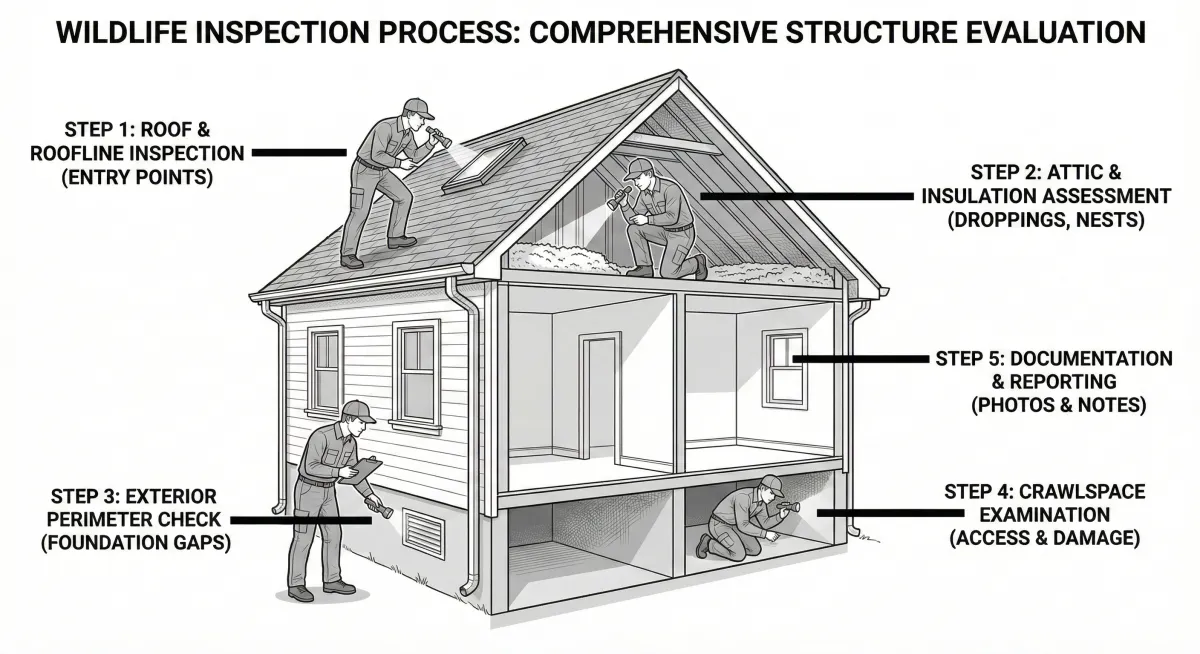
Wildlife Inspection
Our certified technicians thoroughly inspect your attic, crawlspace, and exterior to locate entry points, droppings, and signs of wildlife activity. This detailed assessment is the foundation for a customized removal plan tailored to your property.
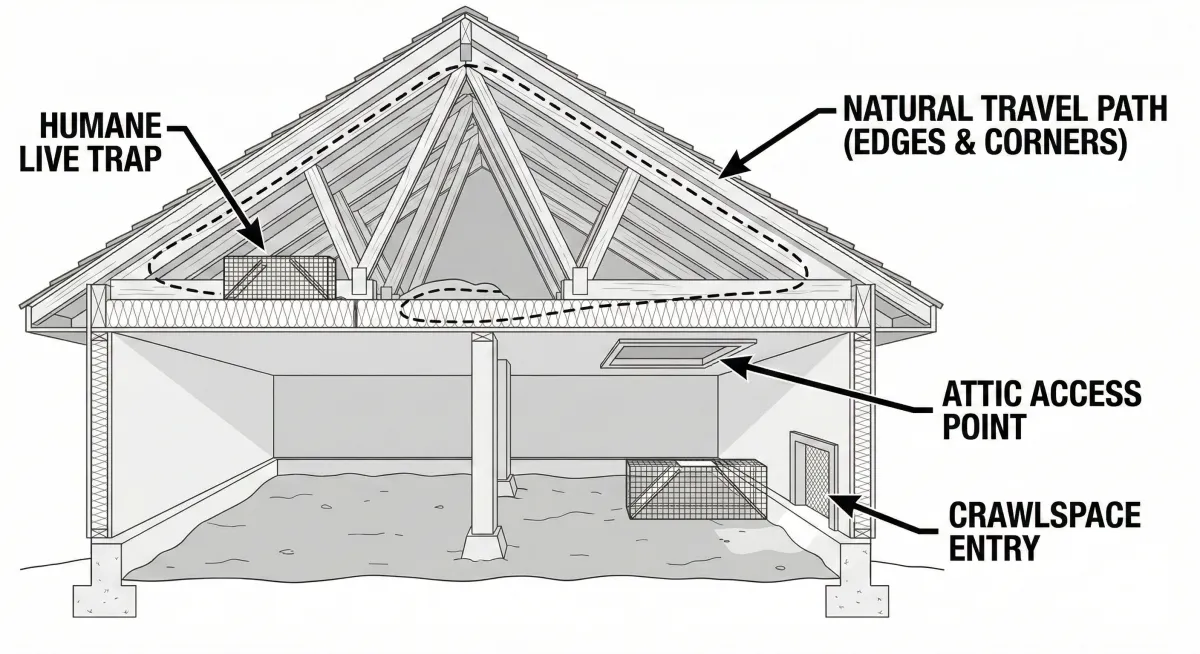
Trapping & Removal
We place humane live traps along natural travel paths — edges, corners, and key access points — where wildlife is most active. Our team monitors traps daily and safely relocates animals to suitable habitats, ensuring a humane and effective process.
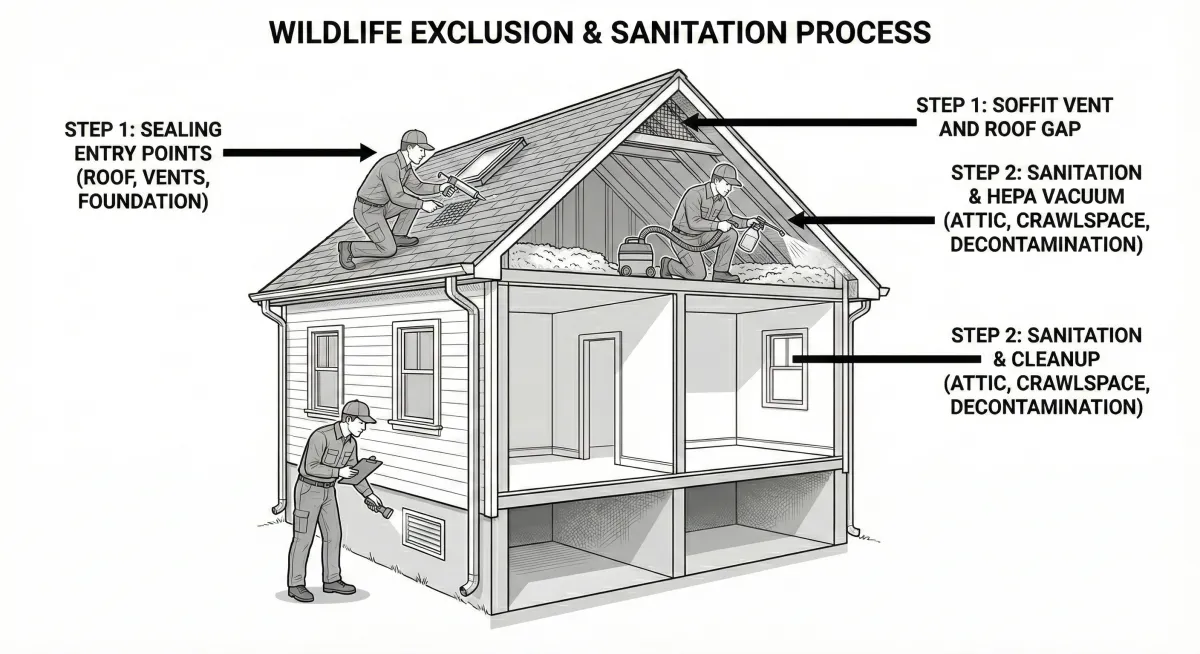
Sealing & Sanitation
Once wildlife is removed, we seal every entry point — soffit gaps, gable vents, foundation cracks, and garage thresholds — to prevent re-entry. Then we sanitize affected areas with HEPA vacuuming, disinfectant application, and deodorizing treatments to restore your home to a safe, clean condition.
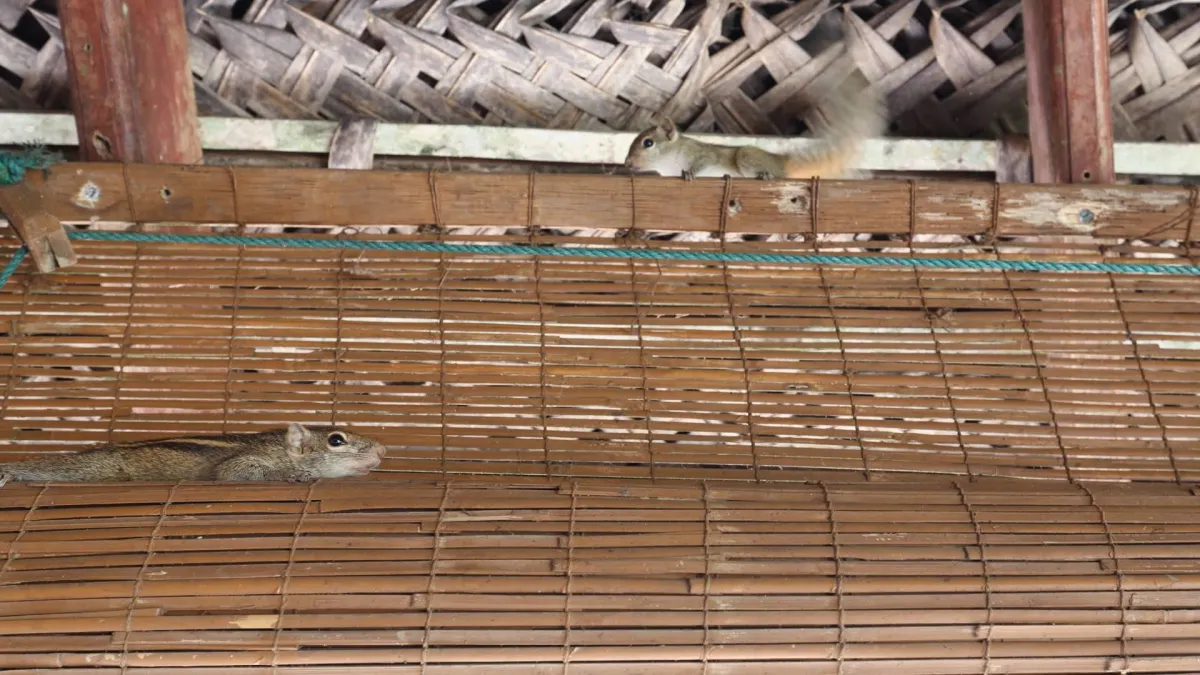
Squirrels
The acrobats of Northwest Arkansas, the charming and bushy-tailed squirrels! Agile climbers and expert foragers, these creatures often venture into urban areas, seeking cozy nesting spots. While their antics might be entertaining outdoors, their presence indoors can lead to challenges that our wildlife removal services are well-equipped to address.
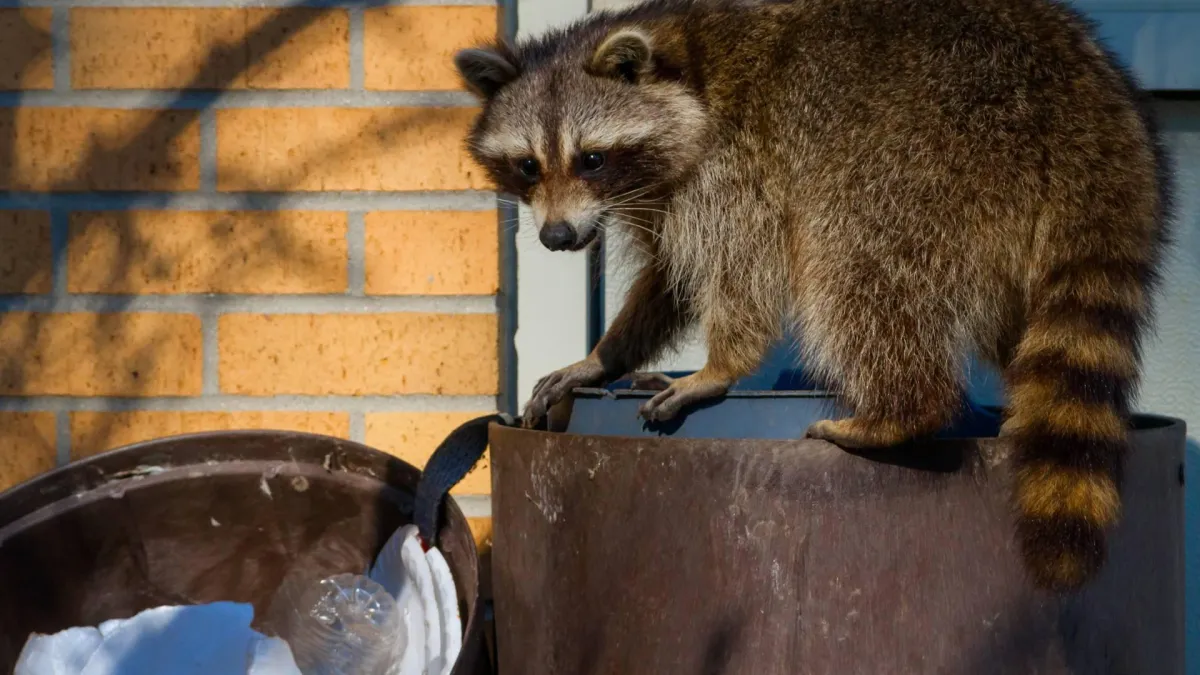
Racoons
Enter the masked marauders of the night, the raccoons! With their distinctive facial markings and ringed tails, these clever creatures are frequent visitors in our urban landscapes. Raccoons, though charming from a distance, can become unwelcome guests in your attic or crawlspace. Let our wildlife removal experts ensure a humane eviction and secure your space from these nocturnal adventurers.
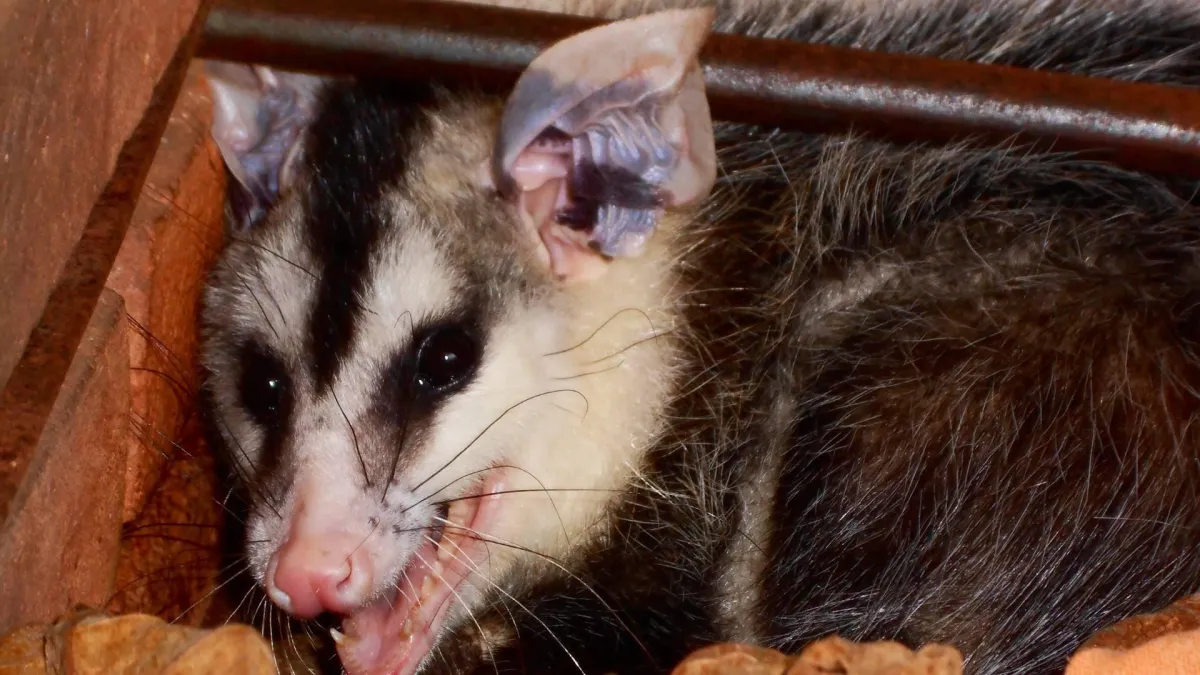
Opossums
With their unique prehensile tails and ability to play possum when threatened, these creatures are adaptable and can find their way into various spaces. Our wildlife removal services are designed to address the challenges posed by opossums, providing a safe and effective resolution.
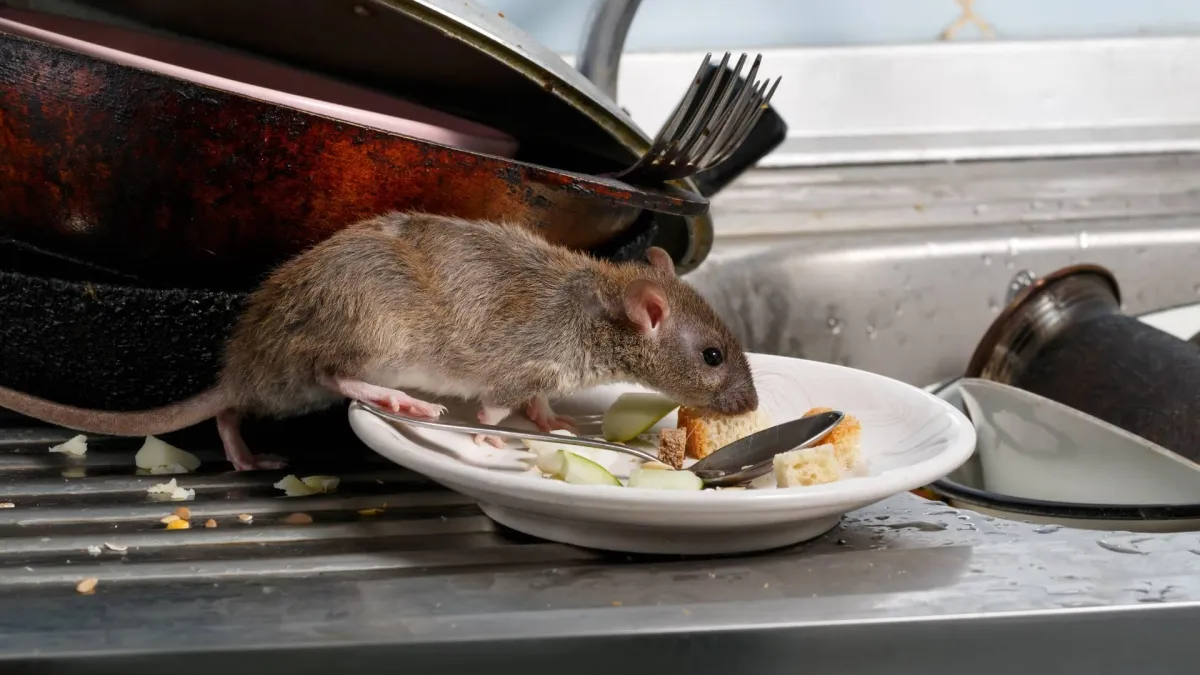
Rats
Small but persistent rodents that may attempt to set up residence in your space – rats! These quick and nimble creatures can squeeze through surprisingly small openings. Our wildlife removal services focus on efficient trapping and exclusion to prevent these disease-carrying rodents from becoming unwanted roommates.
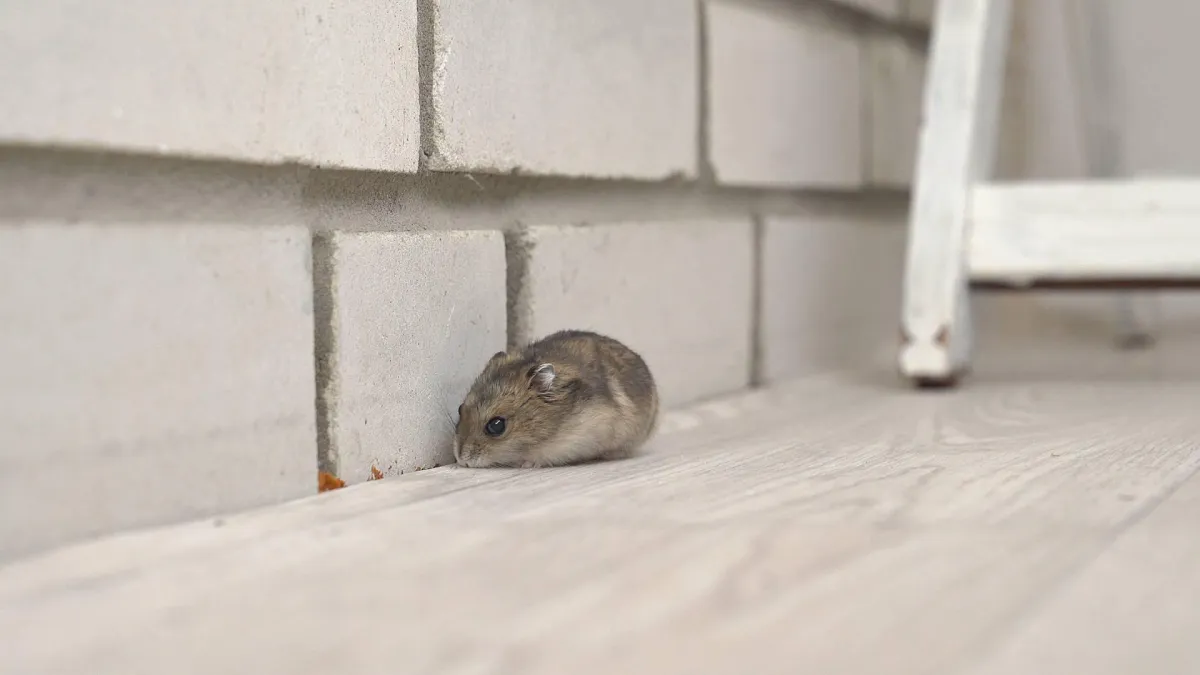
Mice
With their keen sense of smell and ability to reproduce rapidly, mice can become a nuisance in no time. Our wildlife removal services address these pint-sized intruders, ensuring a swift and effective resolution to keep your home or business mouse-free.
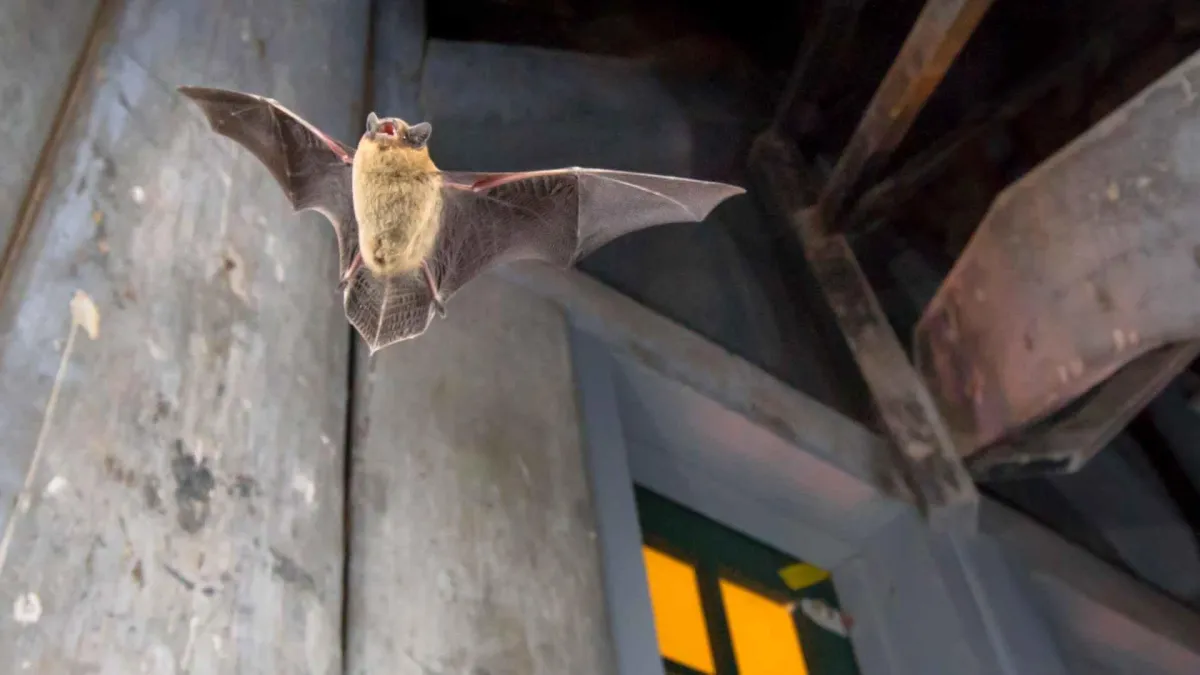
Bat
Bats, while beneficial for the ecosystem, can become unwelcome guests in your home or business. With their ability to roost in attics, chimneys, and other secluded areas, bats can pose health risks and cause significant damage. Our professional bat removal services are designed to safely and humanely evict these nocturnal intruders. We employ advanced techniques and preventive measures to ensure your property remains bat-free, giving you peace of mind and a secure environment.
Frequently Asked Questions
Can animals trapped near the park just be released back into it?
No — state rules prohibit releasing trapped animals back at the originating location. AGFC relocation requirements set minimum distance rules that must be followed. Releasing an animal at the park itself is not a compliant option, and we do not do it.
Is bat removal allowed in homes near the park during summer?
Bat exclusion is restricted during maternity colony season, which runs from May through August under federal guidelines. During those months, mothers and pups cannot legally be excluded from a structure. We can inspect during this period and schedule exclusion work for outside that window.
Does being close to a city park affect how quickly an animal problem gets worse?
Yes — open green space like Kathleen Johnson Memorial Park provides a constant resupply of animals moving toward nearby homes. Once an entry point exists, new animals will find it. Sealing those points promptly after removal is the only way to stop the cycle.
Do Lowell HOAs near the park restrict wildlife trapping on private lots?
Some do. HOA communities near Highway 49 and other areas around the park may have rules around baiting or trap placement. Confirm with your HOA before service begins. Our technician can advise you on compliant methods once we know your community's rules.
Are there more wildlife calls in Lowell during the Northwest Arkansas Naturals season or big event weekends?
Event-day traffic along the Rogers and Lowell corridor can delay response times. If a major event is scheduled and you have an active intrusion, booking ahead of the event weekend is the best way to avoid a wait.
What's the difference between pest control and wildlife control for a Lowell home?
Pest control covers insects and rodents like ants, roaches, and mice. Wildlife control covers larger animals — raccoons, skunks, squirrels, bats, and similar species — which fall under separate state regulations through the AGFC. Both services are available from Network Pest Control, but they involve different methods and rules.
Customer Reviews
At Network Pest Control, we take immense pride in our commitment to customer satisfaction and providing personalized pest control solutions. Our dedicated team understands that every customer and pest problem is unique, which is why we go the extra mile to ensure that each issue is completely resolved.
When you choose Network Pest Control, you can expect a thorough assessment of your pest problem, where our experts analyze the extent of the infestation and identify the underlying causes. We then tailor a customized solution that addresses your specific needs, taking into account factors such as the type of pests, the size of the affected area, and your preferences.
YOU DESERVE A PEST-FREE
ENVIRONMENT
Immediate services available
Licensed technicians
If the bugs come back, so do we!
Request a FREE Estimate
COMPANY STORY
& EXPERIENCE
Craig Broadhead started his pest business in 2004 in California, called Pacific Pest Control. In 2021, he sold his business and moved his family to Arkansas to start fresh with a new vision of Network Pest Control. His goal it to make sure each customer has the best experience possible.
Network Pest Control
11205 Meadow Lark Rd. Rogers AR 72756
479.888.4249