
⭐⭐⭐⭐⭐ 5.0 Rated by Northwest Arkansas Homeowners
Wildlife Control Near Cave Springs City Park
When Animals Move Into Your Yar
Raccoons, armadillos, and groundhogs near Cave Springs City Park? We inspect, remove, and seal entry points.
Serving Cave Springs and nearby Benton County areas.
✅ +521 Happy Customers
✅ Same-week appointments
✅ Serving Rogers, Northwest Arkansas & Southern Missouri
✅ +521 Happy Customers
✅ Same-week appointments
✅ Serving Rogers, Northwest Arkansas & Southern Missouri



Cave Springs, AR is one of the fastest-growing small cities in Benton County — and Cave Springs City Park sits right at the center of it. This page covers wildlife removal and control services for homes along the park corridor and the residential streets nearby.
The park is part of what makes Cave Springs a great place to live. But that same green space creates a direct path for animals moving into yards and homes.
Raccoons, opossums, armadillos, and groundhogs follow the park's wooded edges straight to crawl spaces, attics, and decks. Newer subdivisions, older ranch homes, and properties with wood fencing along those edges are all common targets.
Homeowners searching for wildlife control near Cave Springs City Park often find the problem started at the treeline — not inside the house. Catching it early makes removal and exclusion much simpler.
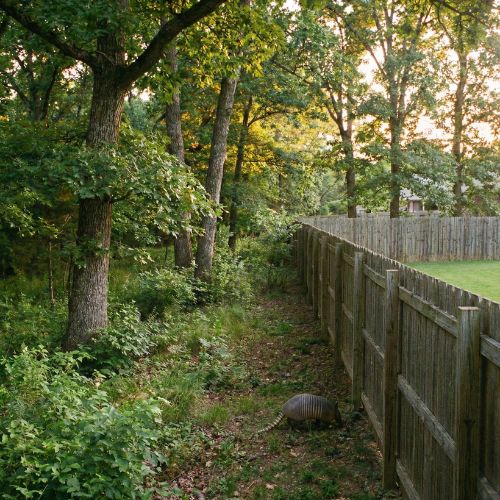
Signs of Wildlife Activity Near Cave Springs City Park Are Easy to Miss at First
If your home sits near the Callahan Rd corridor or off Wagon Wheel Rd, wildlife pressure is part of the landscape. The signs are easy to overlook until the damage is already done.
Scratching sounds at night, disturbed mulch beds, and torn soffit screens are early clues something has moved in. Armadillo digging and yard damage is especially common in this part of Cave Springs — the sandy-loam soil in northwest Arkansas makes digging easy, and armadillos take full advantage of it near slab foundations and garden borders.
Raccoons don't always come through the yard. They use storm drains and creek channels that run near the park to move between properties without crossing open ground, and raccoon attic entry and removal is one of the most common calls we get from this part of Benton County. Groundhog burrows near concrete slabs are a known issue in Benton County's newer subdivisions, where disturbed soil from recent construction stays loose longer.
Cave Springs sits inside a humid mixed forest zone. Animal pressure here is year-round — not just a spring or fall problem. If you're noticing activity now, it won't stop on its own.
Green Space Edges Create Real Entry Points Into Cave Springs Homes
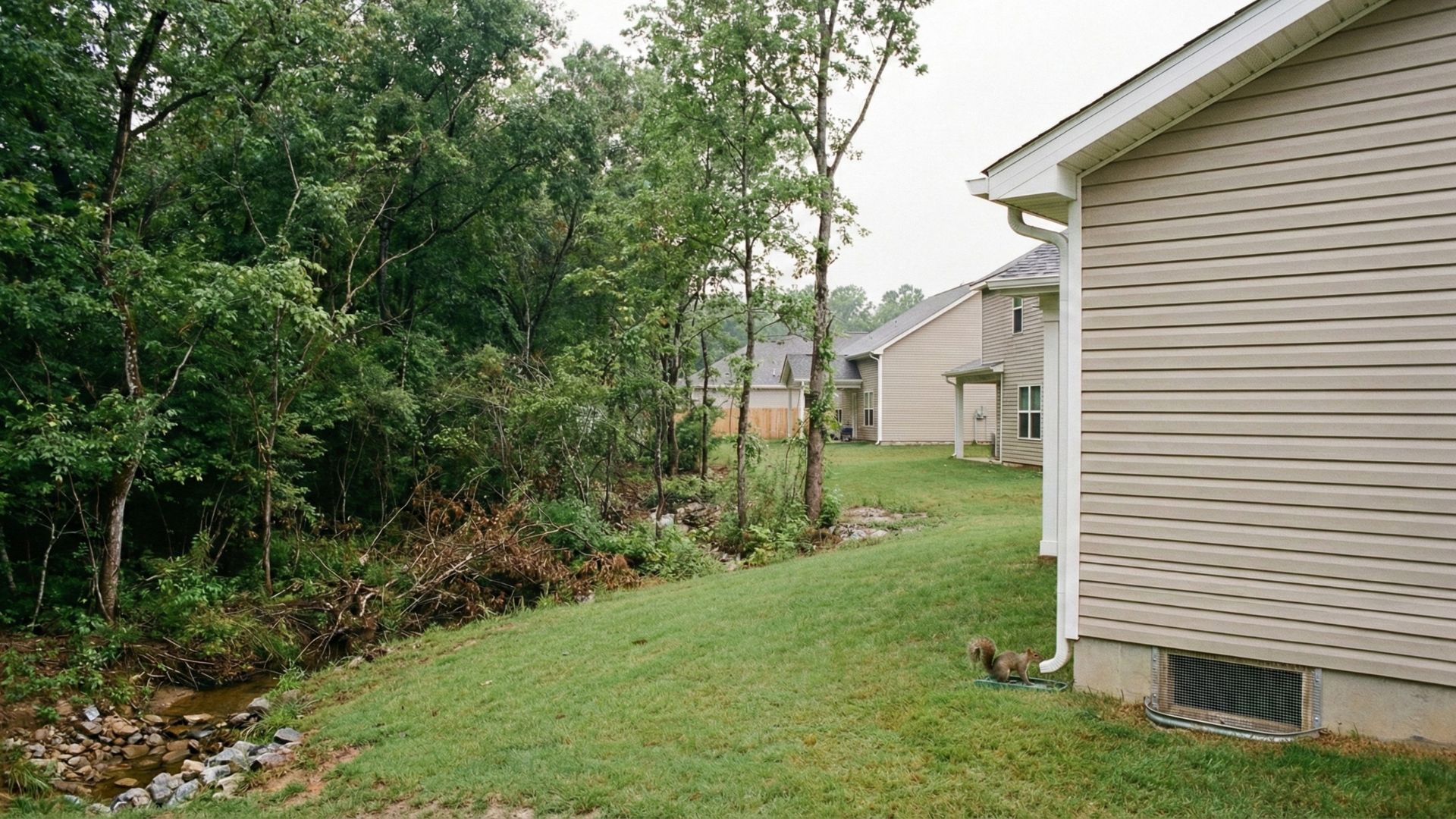
Homes whose yards back up to the park's tree line or the retention areas near the lake feature at City Park face the most consistent wildlife pressure. The park's natural buffer — trees, brush, and small creek drainage — works like a wildlife highway right to your property line.
Animals follow the edge between mowed grass and wooded cover. That edge leads directly to attics, decks, and crawl space vents. Properties off Greenhouse Rd and near the Elm Springs border face similar pressure for the same reason — the green space doesn't stop at the city limit.
Newer construction in Cave Springs often uses vinyl siding and foam board insulation. Both materials are easier for squirrel entry through vinyl siding than the older wood and brick construction found in other parts of Benton County. This isn't a flaw in the build — it's just a known vulnerability in this part of northwest Arkansas.
Some Cave Springs neighborhoods have HOA landscaping rules that limit how much brush homeowners can clear from their property edges. Those restrictions keep animal travel corridors active longer than most homeowners expect. If your HOA limits what you can remove from your yard's perimeter, exclusion work on the structure itself becomes more important.
What Happens During a Wildlife Inspection in the Cave Springs Area
If you've never called for a wildlife inspection before, here's what to expect. Our inspector checks your roofline, attic vents, crawl space access points, and fence gaps — every location where an animal could enter or has already entered.
We identify species by track size, scat, and the shape of the entry hole. There's no guessing involved. Knowing what animal you're dealing with determines how we trap, exclude, and follow up.
Many Cave Springs homes were built on sloped lots, especially in the Callahan Rd area. Crawl space inspections on these properties require specific access points and more time to cover the full perimeter. We account for that before we start. All findings are documented before any trapping or exclusion work begins — you'll know exactly what we found and where.
Homes near the Lowell and Rogers city limits go through the same inspection process. Edge-of-city addresses don't require extra steps or separate scheduling.
Removing Wildlife the Right Way Follows Arkansas Game & Fish Rules
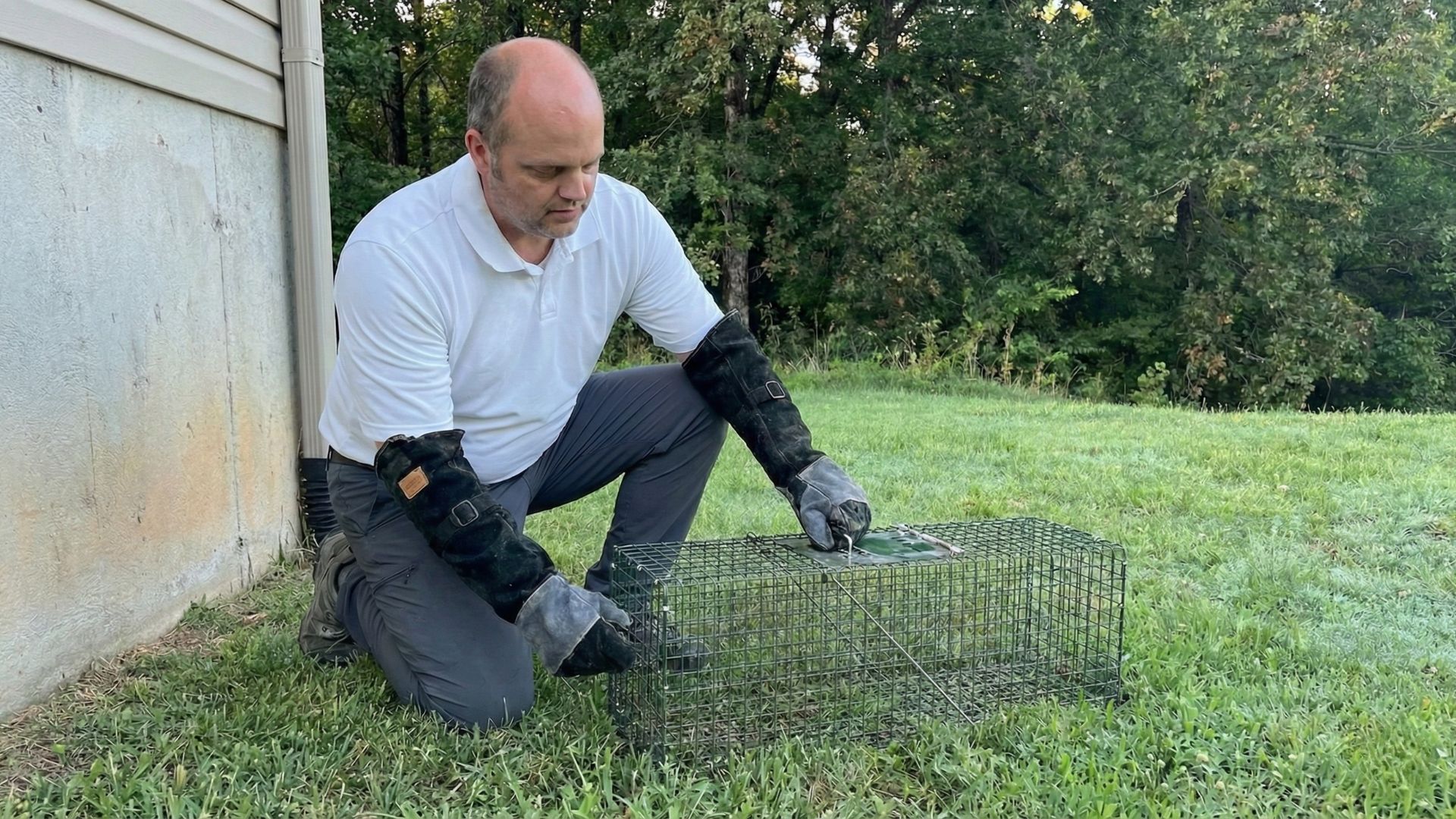
Trapping and relocating wildlife in Arkansas isn't a free-for-all. The Arkansas Game & Fish Commission sets rules for handling native species. Raccoons, opossums, and beaver each have specific guidelines covering how they can be trapped and where they can be released.
Armadillos are not a protected species in Arkansas, but humane handling still applies. Relocation sites have to meet distance and habitat requirements — dropping an animal in the nearest wooded area doesn't qualify under professional standards.
Cave Springs is in Benton County, and county ordinances can affect where certain animals may be released near city park boundaries. We factor that in before any removal takes place. Squirrels inside attics require timed exclusion work — if juveniles are present, removing the adult too early causes more problems. Timing matters most in spring and again in late summer.
Unlicensed trapping puts you at legal risk and often fails to solve the problem. Hiring a licensed professional means the removal holds up under state rules and the animal is handled properly from start to finish.
Keeping Animals Out After Removal Takes More Than One Step
Removal solves the immediate problem. Humane wildlife removal and exclusion keeps it from coming back. If you've had repeated wildlife issues or a prior attempt that didn't hold, exclusion work is where the long-term fix happens.
We seal all confirmed and potential entry points — not just the spot where the animal was found.
Common exclusion points in Cave Springs homes include:
Gable vents and ridge vents
Fascia gaps behind gutters
Pipe collars and utility line entries
Crawl space screens and foundation vents
Yard-level deterrents like motion lighting and gravel barriers reduce re-entry pressure from the park edge. They won't stop a determined animal on their own, but combined with sealed entry points, they raise the effort required enough to redirect most animals.
Cave Springs City Park hosts community events through the year — you can check the Cave Springs city event calendar to see what's coming up. On event days, increased foot traffic through the park displaces animals toward nearby residential properties. Scheduling exclusion work before a busy event weekend gives your home the best protection during those high-pressure periods.
Properties near Beaver Lake tributary zones in western Benton County face similar corridor pressure and use the same exclusion plan approach. For park-adjacent properties with ongoing activity, we offer monitoring check-ins after the initial exclusion is complete.
Getting to the Cave Springs Area — How We Reach Your Property
Cave Springs is accessed primarily via AR-264 (Wagon Wheel Rd) and Greenhouse Rd coming from the Rogers and Lowell side.
Cave Springs City Park sits near the center of town, and most residential streets in the city are within a 5 to 10 minute drive from the park.
Driving directions to the Cave Springs service area:
From Rogers, head west on AR-264 (Wagon Wheel Rd). Continue through the Lowell area and follow AR-264 as it curves into Cave Springs. Greenhouse Rd connects from the south if you're coming up from Elm Springs.
Most neighborhoods on the Callahan Rd corridor are a short turn north off Wagon Wheel once you're inside the city limits. Cave Springs City Park will appear on your left as a landmark for the central part of town.
Morning appointments work best for streets near the park. School-hour traffic on Wagon Wheel Rd can slow access during drop-off and pick-up windows. Booking before 8 a.m. or after 9 a.m. keeps your appointment on schedule.
Same-day or next-day slots are often available for Cave Springs addresses. The smaller city footprint means less scheduling backlog than larger markets. We also cover nearby Elm Springs, Lowell, and south Rogers addresses — all handled in one trip without separate scheduling.
Our Wildlife Removal Process
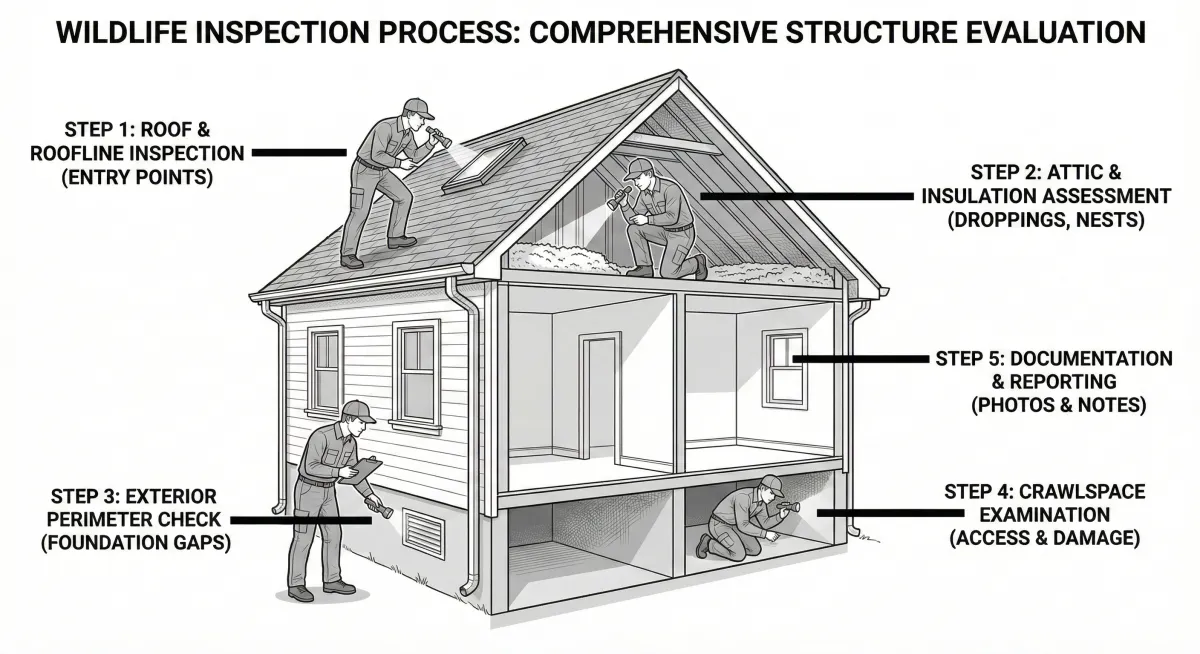
Wildlife Inspection
Our certified technicians thoroughly inspect your attic, crawlspace, and exterior to locate entry points, droppings, and signs of wildlife activity. This detailed assessment is the foundation for a customized removal plan tailored to your property.
Trapping & Removal
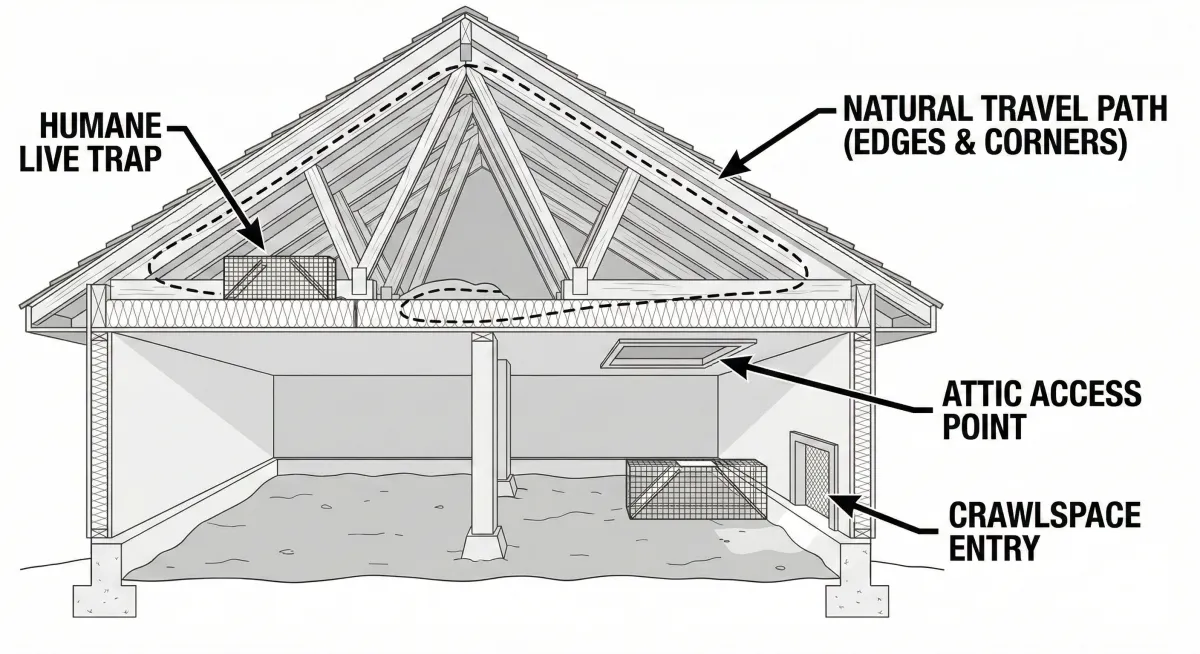
We place humane live traps along natural travel paths — edges, corners, and key access points — where wildlife is most active. Our team monitors traps daily and safely relocates animals to suitable habitats, ensuring a humane and effective process.
Sealing & Sanitation
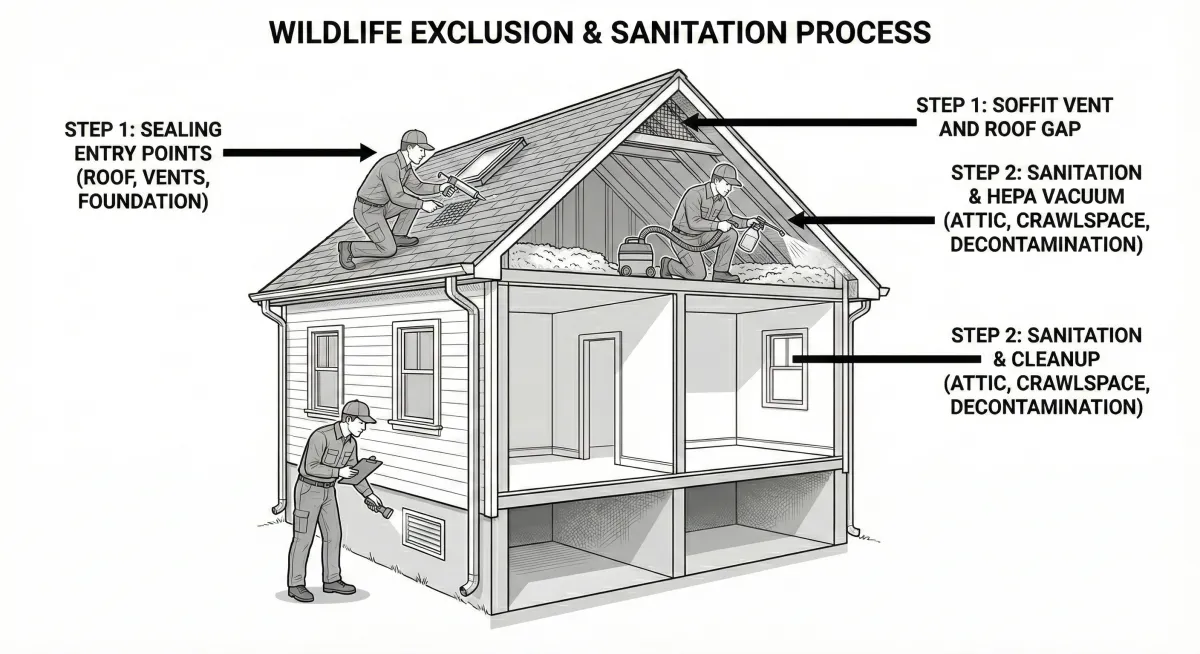
Once wildlife is removed, we seal every entry point — soffit gaps, gable vents, foundation cracks, and garage thresholds — to prevent re-entry. Then we sanitize affected areas with HEPA vacuuming, disinfectant application, and deodorizing treatments to restore your home to a safe, clean condition.
Squirrels
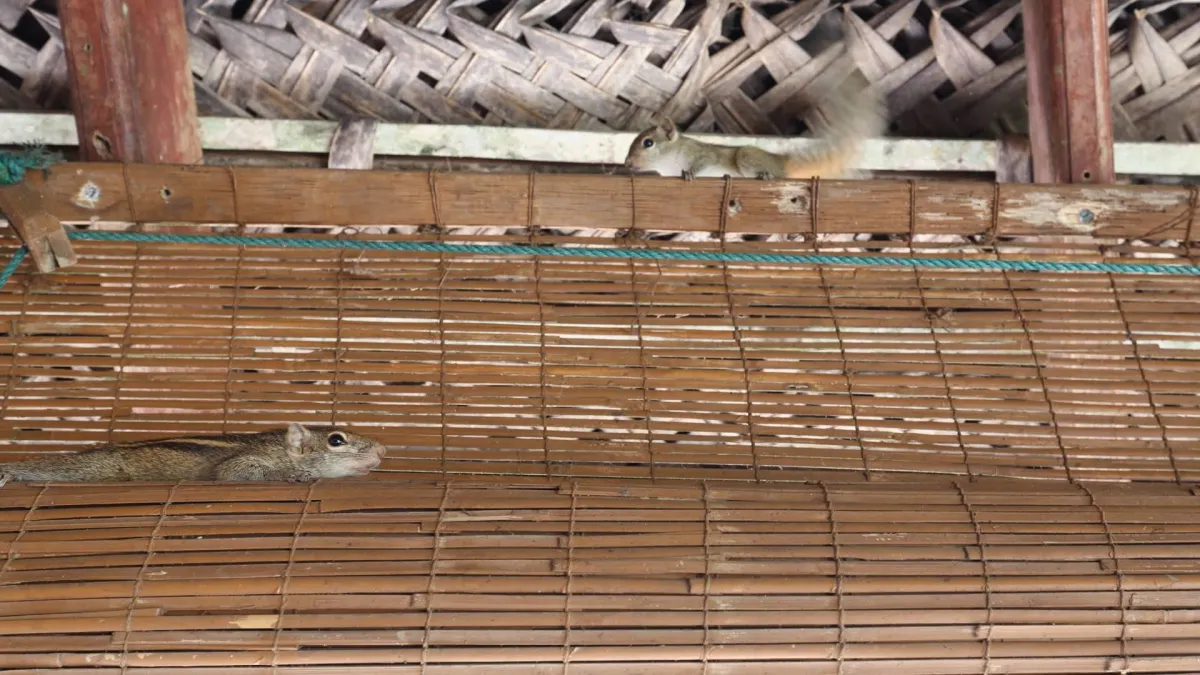
The acrobats of Northwest Arkansas, the charming and bushy-tailed squirrels! Agile climbers and expert foragers, these creatures often venture into urban areas, seeking cozy nesting spots. While their antics might be entertaining outdoors, their presence indoors can lead to challenges that our wildlife removal services are well-equipped to address.

Racoons
Enter the masked marauders of the night, the raccoons! With their distinctive facial markings and ringed tails, these clever creatures are frequent visitors in our urban landscapes. Raccoons, though charming from a distance, can become unwelcome guests in your attic or crawlspace. Let our wildlife removal experts ensure a humane eviction and secure your space from these nocturnal adventurers.
Opossums
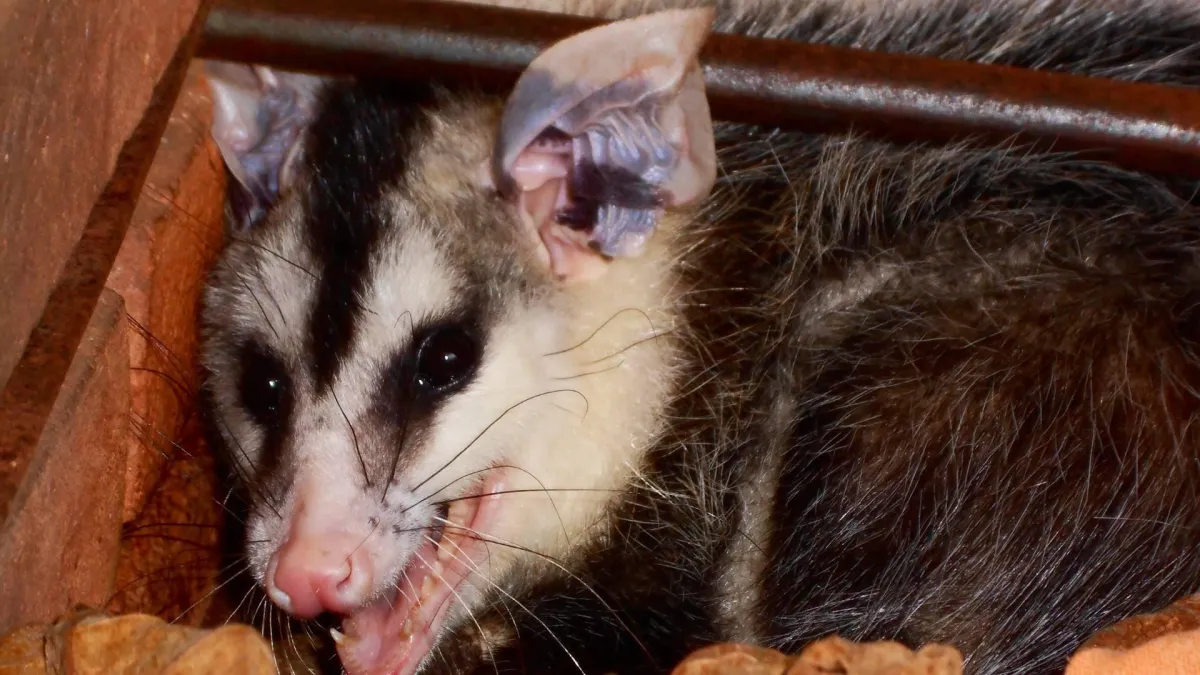
With their unique prehensile tails and ability to play possum when threatened, these creatures are adaptable and can find their way into various spaces. Our wildlife removal services are designed to address the challenges posed by opossums, providing a safe and effective resolution.

Rats
Small but persistent rodents that may attempt to set up residence in your space – rats! These quick and nimble creatures can squeeze through surprisingly small openings. Our wildlife removal services focus on efficient trapping and exclusion to prevent these disease-carrying rodents from becoming unwanted roommates.
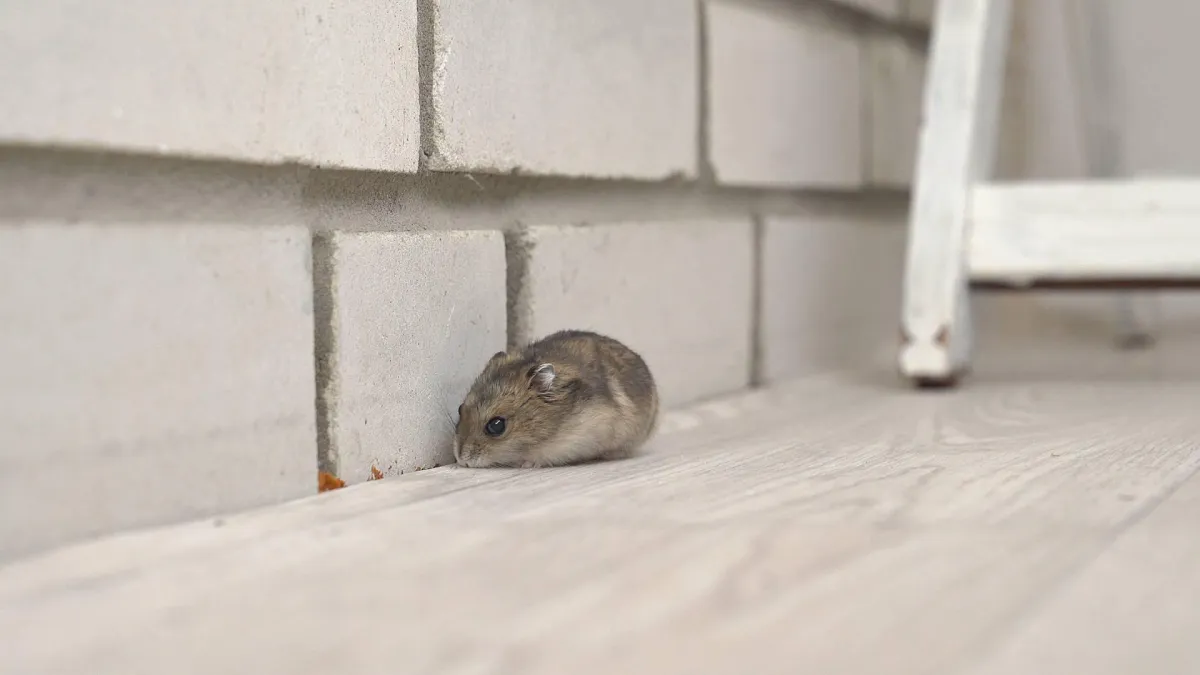
Mice
With their keen sense of smell and ability to reproduce rapidly, mice can become a nuisance in no time. Our wildlife removal services address these pint-sized intruders, ensuring a swift and effective resolution to keep your home or business mouse-free.
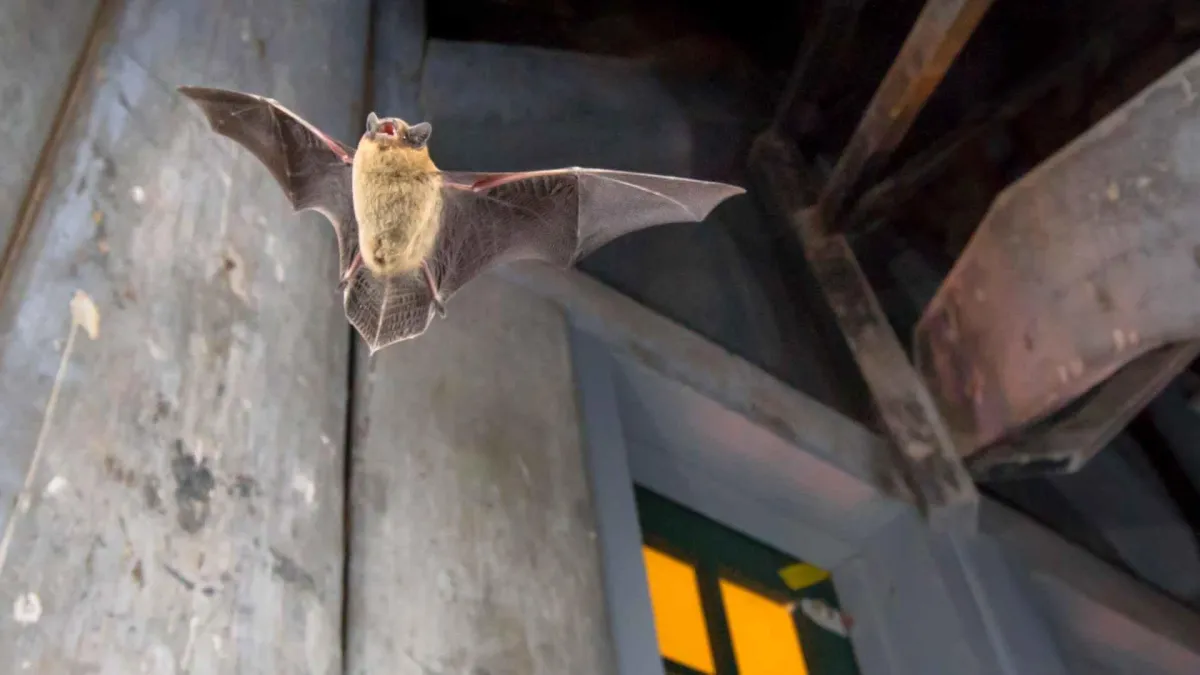
Bat
Bats, while beneficial for the ecosystem, can become unwelcome guests in your home or business. With their ability to roost in attics, chimneys, and other secluded areas, bats can pose health risks and cause significant damage. Our professional bat removal services are designed to safely and humanely evict these nocturnal intruders. We employ advanced techniques and preventive measures to ensure your property remains bat-free, giving you peace of mind and a secure environment.
Frequently Asked Questions
Can I trap an animal myself near Cave Springs City Park?
You can legally trap some species with limits, but unlicensed trapping of raccoons, opossums, and other protected native species violates Arkansas Game & Fish Commission rules. Fines apply, and improper relocation can make the problem worse. A licensed professional handles the paperwork and the animal at the same time.
Do event days at Cave Springs City Park affect scheduling?
Yes — park events push displaced animals toward homes on nearby residential streets. We recommend scheduling inspections or exclusion work before or after known event weekends at the park. If you're unsure of the event calendar, we can help you pick a window that works.
Does my HOA in Cave Springs need to approve exclusion work?
It depends on your HOA's CC&Rs. Exterior repairs and structural modifications sometimes require prior approval, even when they're for pest or wildlife control. Check your CC&Rs before work begins or ask us — we've worked with Cave Springs HOA properties before and can walk you through what's typically required.
Are armadillos protected in Arkansas?
Armadillos are not a protected species in Arkansas. However, humane removal methods still apply under professional standards. Our team handles armadillo removal and disposal properly — including follow-up exclusion to prevent new animals from moving into the same burrow site.
What animals are most common near Cave Springs City Park?
Raccoons, armadillos, groundhogs, opossums, and squirrels are all confirmed active along Benton County green-space edges. Armadillos are especially common near the park due to the sandy-loam soil in this part of northwest Arkansas. Raccoons are the most frequent attic invader in Cave Springs residential neighborhoods.
How soon can an inspection happen in Cave Springs?
Same-week slots are common for Cave Springs addresses. The smaller city footprint means we can usually get out faster here than in larger markets like Fayetteville or Bentonville. Call or check availability online to see what's open this week.
Customer Reviews
At Network Pest Control, we take immense pride in our commitment to customer satisfaction and providing personalized pest control solutions. Our dedicated team understands that every customer and pest problem is unique, which is why we go the extra mile to ensure that each issue is completely resolved.
When you choose Network Pest Control, you can expect a thorough assessment of your pest problem, where our experts analyze the extent of the infestation and identify the underlying causes. We then tailor a customized solution that addresses your specific needs, taking into account factors such as the type of pests, the size of the affected area, and your preferences.
YOU DESERVE A PEST-FREE
ENVIRONMENT
Immediate services available
Licensed technicians
If the bugs come back, so do we!
Request a FREE Estimate
COMPANY STORY
& EXPERIENCE
Craig Broadhead started his pest business in 2004 in California, called Pacific Pest Control. In 2021, he sold his business and moved his family to Arkansas to start fresh with a new vision of Network Pest Control. His goal it to make sure each customer has the best experience possible.

Network Pest Control
11205 Meadow Lark Rd. Rogers AR 72756
479.888.4249