
What a Wildlife Control Technician Does at Your Home | Rogers AR
The Initial Phone Consultation
The work starts with a phone call — before anyone shows up at your door. A good wildlife control company in Rogers will ask you a few things first:
- What sounds are you hearing?
- What time of day do you hear them?
- Which part of the house seems affected?
- Have you seen droppings, damage, or the animal itself?
These questions aren't random. The answers help the technician figure out what kind of animal it might be and bring the right tools and traps.
Common wildlife that get into Rogers homes
| Animal | When It's Active | How It Gets In |
|---|---|---|
| Raccoons | Nighttime | Openings 4+ inches wide |
| Gray squirrels | Daytime | Gaps as small as a golf ball |
| Bats | Dusk and dawn | Cracks as narrow as ⅜ inch |
| Opossums | Nighttime | Decks, porches, and sheds |
| Armadillos | Nighttime | Burrowing near foundations |
| Snakes | Varies by species | Ground-level gaps and cracks |
Each one acts differently and needs a different removal approach.
The Full Property Inspection
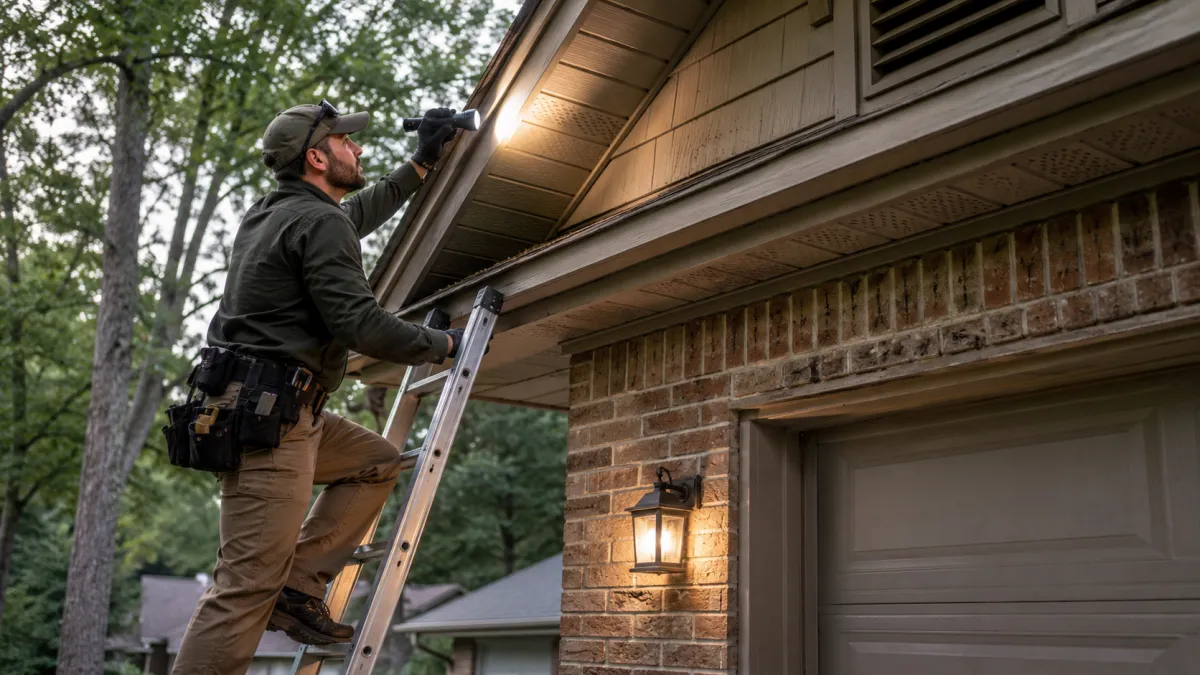
Once the technician gets to your home, they do a full inspection. This is the most important part of the whole job.
Areas they check on the outside
- Roof and roofline
- Soffit and fascia
- Gable vents and ridge vents
- Chimney caps
- Plumbing mats
- Foundation vents
- Crawlspace openings
- Garage door seals
In Rogers, homes range from older houses near downtown to newer builds out toward Pinnacle Hills. Each style has its own weak spots where animals can get in.
Species Identification and Behavior Assessment
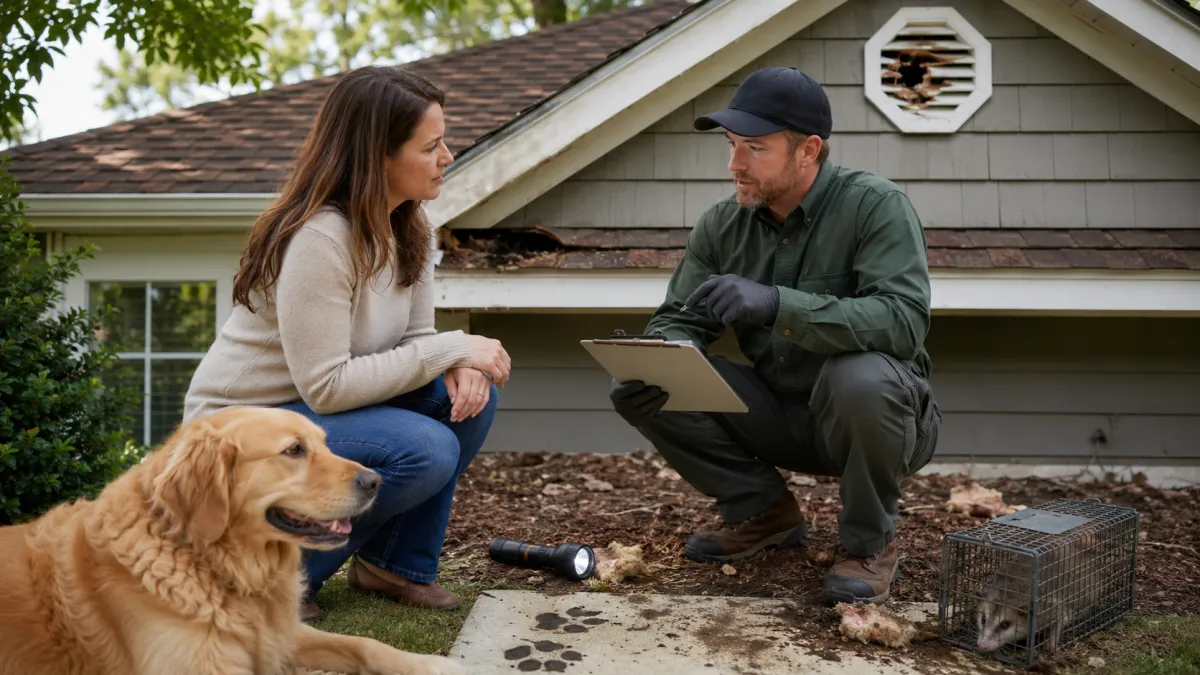
Figuring out which animal you're dealing with is a big deal. Arkansas state law, managed by the Arkansas Game and Fish Commission, has different rules for different animals.
- Some species are protected year-round.
- Some can only be trapped during certain seasons.
- Others require special permits to handle.
A trained wildlife control technician in Rogers knows these rules and follows them.
How they identify the species
| Evidence Type | What It Tells the Technician |
|---|---|
| Track patterns | Species and size of animal |
| Droppings | Species, diet, and how long it's been there |
| Fur or feather remnants | Species confirmation |
| Entry hole size and shape | Which animal made or used it |
| Time-of-day activity | Nocturnal vs. daytime species |
| Nesting material | Whether young are present |
The Removal Strategy
After the inspection, the technician makes a plan based on what they found. There's no one method that works for every job.
Common removal techniques
- One-way exclusion devices — let the animal leave but block re-entry
- Live traps — set along the paths the animal travels
- Direct capture — used when trapping isn't practical
What determines which method gets used
- The species involved
- How many animals are inside
- Whether babies are present
- How the house is built
- The time of year
In Rogers, neighborhoods like Olde Bryce and areas near Lake Atalanta sit close to thick trees and creek beds. Homes there tend to see more wildlife pressure than houses in newer, more open parts of town. A technician who knows the area plans around that.
If squirrels are the issue, the approach is different — you can read more about that on our squirrel removal page.
Exclusion and Seal-Up Work
Getting the animal out is only half the job. If the entry points stay open, another animal will move in — sometimes within weeks.
Sealing those openings is called exclusion. It's one of the most valuable things a technician does.
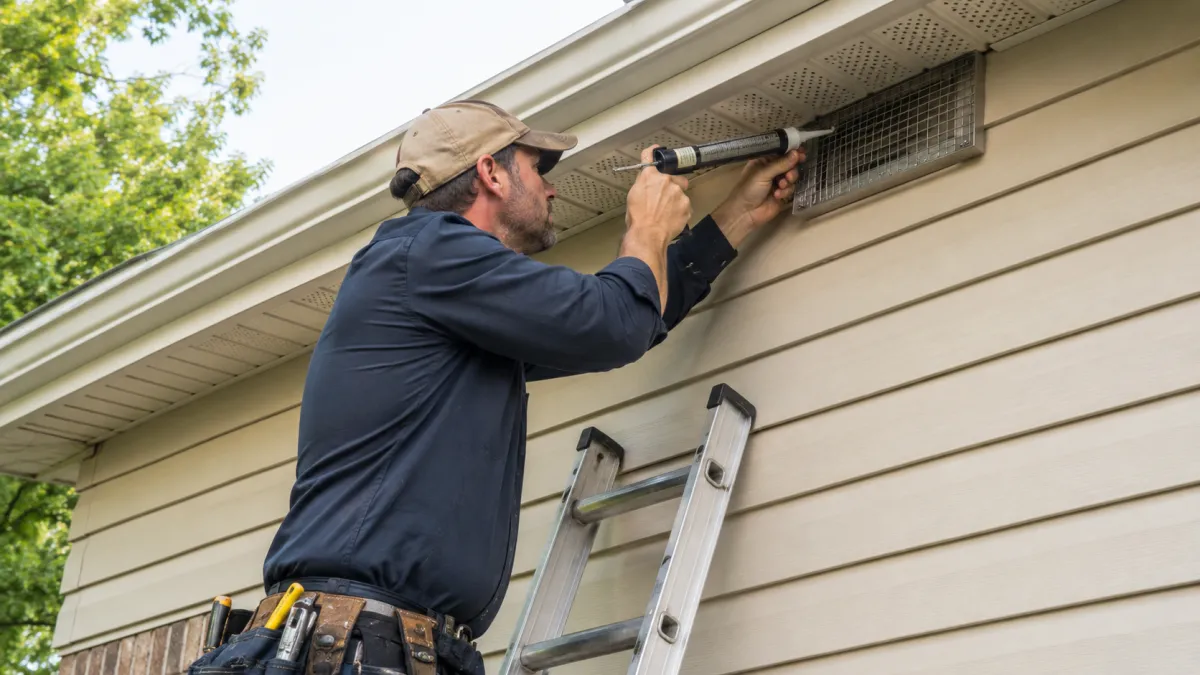
Materials used for exclusion
| Material | Best Used For |
|---|---|
| Galvanized steel mesh | Roof and soffit gaps |
| Metal flashing | Roofline and fascia joints |
| Heavy-gauge hardware cloth | Vents and crawlspace openings |
| Commercial-grade sealant | Small cracks and pipe entry points |
These materials have to hold up against animals trying to chew back in — and they need to handle the Rogers climate, which brings humid summers, ice storms, and big temperature swings.
Other things a good technician addresses
- Tree branches hanging over the roof
- Bird feeders placed too close to the house
- Trash storage that attracts animals
- Landscaping that gives wildlife cover near the foundation
When birds are nesting in your vents or eaves, that calls for a different process — our bird removal and exclusion service handles those cases.
Sanitation and Damage Remediation
Once the animal is out and the house is sealed, there's still cleanup to do. Wildlife leaves behind:
- Droppings and urine
- Nesting material
- Parasites
- Sometimes a deceased animal still inside the structure
What cleanup usually involves:
- Removing contaminated insulation
- Treating surfaces with antimicrobial agents
- Installing new insulation
A lot of Rogers homeowners are surprised to find that new insulation also helps lower energy bills, since damaged insulation doesn't work the way it should.
Documentation and Follow-Up
A professional wildlife control company gives you paperwork showing what they found and what they did.
What that documentation includes:
- Inspection notes and findings
- Photos of entry points before and after seal-up
- A record of the removal method used
Follow-up visits are part of the process too. A good technician comes back to make sure the exclusion work is holding and no new animals have moved in.
Why This Matters for Rogers Homeowners
Rogers sits where neighborhoods and nature run right into each other. Beaver Lake, the Ozark forests, and the creek systems that wind through town all create the kind of habitat wildlife loves. That's part of what makes the area great — but it also means animals getting into homes is not rare. It happens all the time.
A full wildlife control job includes every one of these steps:
- Property inspection
- Species identification
- Humane removal
- Exclusion and seal-up
- Sanitation and cleanup
- Follow-up visits
Skipping steps almost always leads to the problem coming back and costing more the second time around.
You can learn more about how we handle wildlife on our wildlife control services in Rogers, Arkansas page, or check out our pest library to help figure out what animal you might be dealing with.
Network Pest Control
11205 Meadow Lark Rd. Rogers AR 72756
479.888.4249