
⭐⭐⭐⭐⭐ 5.0 Rated by Northwest Arkansas Homeowners
Beaver removal
in Rogers, AR
done right the first time.
Beavers flooding your Rogers property? We offer humane trapping, dam removal & exclusion fencing. Licensed Arkansas wildlife control. Fast response statewide.
✅ +521 Happy Customers
✅ Same-week appointments
✅ Serving Rogers, Northwest Arkansas & Southern Missouri.
✅ +521 Happy Customers
✅ Same-week appointments
✅ Serving Rogers, Northwest Arkansas & Southern Missouri



In Rogers, AR, beavers can dam creeks and drainage areas, causing flooding in yards, roads, and farm fields—and leading to costly damage fast. If you’re seeing rising water, chewed trees, or a new dam forming, it’s time to take action before the problem spreads to neighboring properties.
This page explains humane beaver removal in Rogers, proven exclusion methods, and the key signs for when to call a licensed pest control and wildlife control team instead of trying to handle it yourself.
We respond quickly across Rogers neighborhoods and throughout Northwest Arkansas, working within Arkansas wildlife regulations. Expect safe trapping, dam removal, and long-term exclusion to protect your property and help ensure beavers stay off your land.
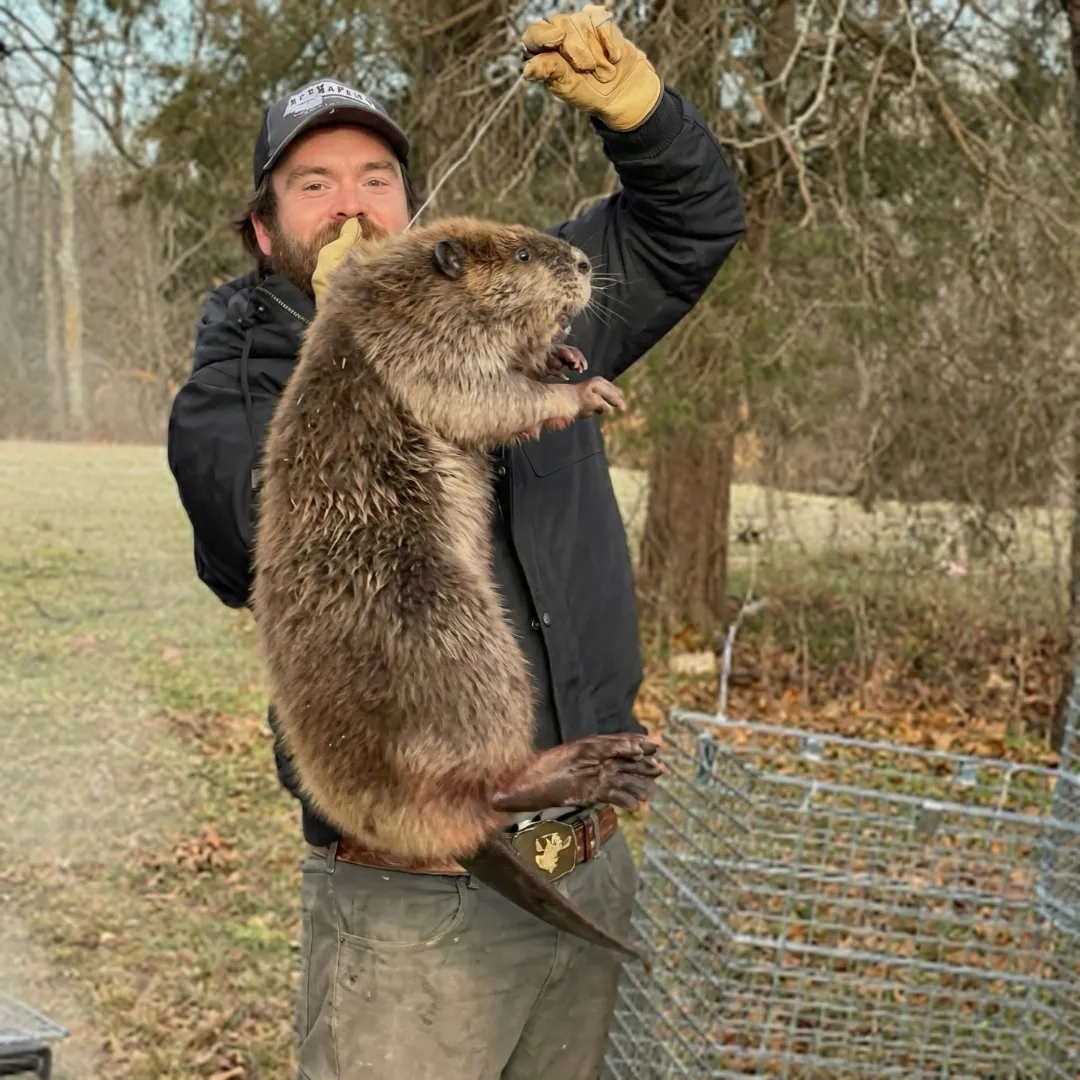
Beavers Dam Creeks and Cause Flooding on Rogers Properties
Beavers build dams across creeks to make ponds. When they block streams near your Rogers property, water backs up onto driveways, basements, and pastures. You may see standing water that won't drain, washed-out culverts, or soggy ground that kills grass and plants.
Rogers sits near many streams that feed Beaver Lake. Spring rains make flooding worse when beaver dams stop normal drainage.
Homeowners near Lake Atalanta and farmers along creek-fed fields see the most damage. Water around your foundation can crack concrete and cause mold inside your home.
We've seen firsthand how quickly beaver flooding escalates. One Rogers homeowner called us after noticing a small puddle near their garage. Within two weeks, that puddle had become a pond covering half their backyard. The water had already started seeping into their foundation by the time we arrived. That's the thing about beaver damage—it compounds fast.
Flooded pastures ruin crops and make mud pits that trap livestock. Roads with backed-up culverts wear away fast and cost thousands to repair. Catching beaver activity early stops these problems before you need major fixes. My advice: if you see even one chewed tree near your creek, don't wait. The dam might already be under construction.
Licensed Pest Control Professionals Handle Beaver Removal Safely
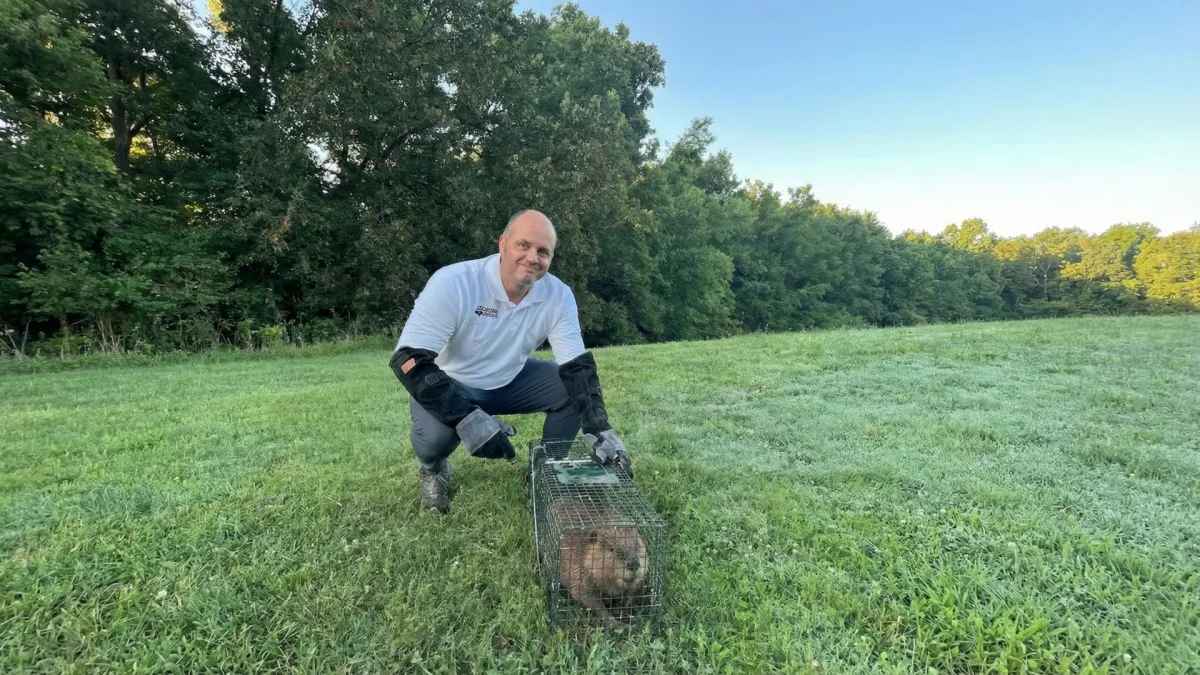
Arkansas requires permits for certain wildlife removal. We hold active licenses through Arkansas Game & Fish and follow state trapping laws. You avoid fines and legal trouble when a certified team handles beaver removal for you.
Beavers bite when cornered and can carry bacteria or rabies. Their teeth cut through bone and cause deep wounds that need medical care. Our trained technicians use protective gear and humane traps so you stay safe. We know where beavers hide, how they move, and which methods work without hurting the animals.
We'll be honest—beavers are deceptively dangerous. They look harmless when you see them swimming, almost cute with those flat tails. But we've watched a cornered beaver tear through a wooden fence post in seconds. Those incisors are designed to fell trees, and they won't hesitate to use them on a person. We had one client who tried to relocate a beaver himself using a fishing net. He ended up in the ER with 14 stitches in his forearm.
Property owners in Rogers who try DIY removal often damage creek banks or set traps wrong. We place traps near active trails and feeding spots based on fresh signs. You get faster results and no harm to pets or other wildlife.
For comprehensive humane wildlife removal services, our licensed team follows all Arkansas regulations while protecting your property.
The permit requirements exist for good reason. We've responded to calls where homeowners set illegal traps or relocated beavers to areas where they weren't allowed. One family relocated a beaver family to a neighbor's creek without permission, which resulted in fines and damaged relationships. Not worth the risk when professionals can handle it legally.
Humane Trapping and Relocation Remove Beavers Without Harm
We use live traps that catch beavers overnight without injury. Traps are checked daily so animals spend little time confined. Once caught, beavers are moved to legal relocation sites away from homes.
Northwest Arkansas has special release zones where beavers can build dams and restore stream ecosystems without flooding homes or roads. We follow Arkansas Game & Fish rules for every relocation. Beavers moved to approved habitat do not return to your property because they make new territory miles away.
Here's what most people don't realize: beavers are actually incredible ecosystem engineers. In the right location, their dams create wetlands that support dozens of other species. We've relocated beaver families to designated habitat zones and returned months later to find thriving ecosystems—birds nesting, fish populations booming, vegetation flourishing. It's remarkable.
Non-lethal removal helps Rogers residents who want beavers gone but prefer humane solutions. You get rid of the flooding problem while the animals continue their natural behavior in safe locations. Most wildlife removal trapping finishes in 3–7 days depending on how many beavers are on your land.
We've found that most Rogers families prefer relocation when we explain that beavers aren't pests by nature—they're just doing what evolution programmed them to do. One elderly couple told us they felt guilty about removing the beavers until we showed them photos of where we'd relocate them. Seeing that the animals would have a better home made all the difference to them emotionally.p
Exclusion Fencing and Tree Guards Keep Beavers Away Permanently
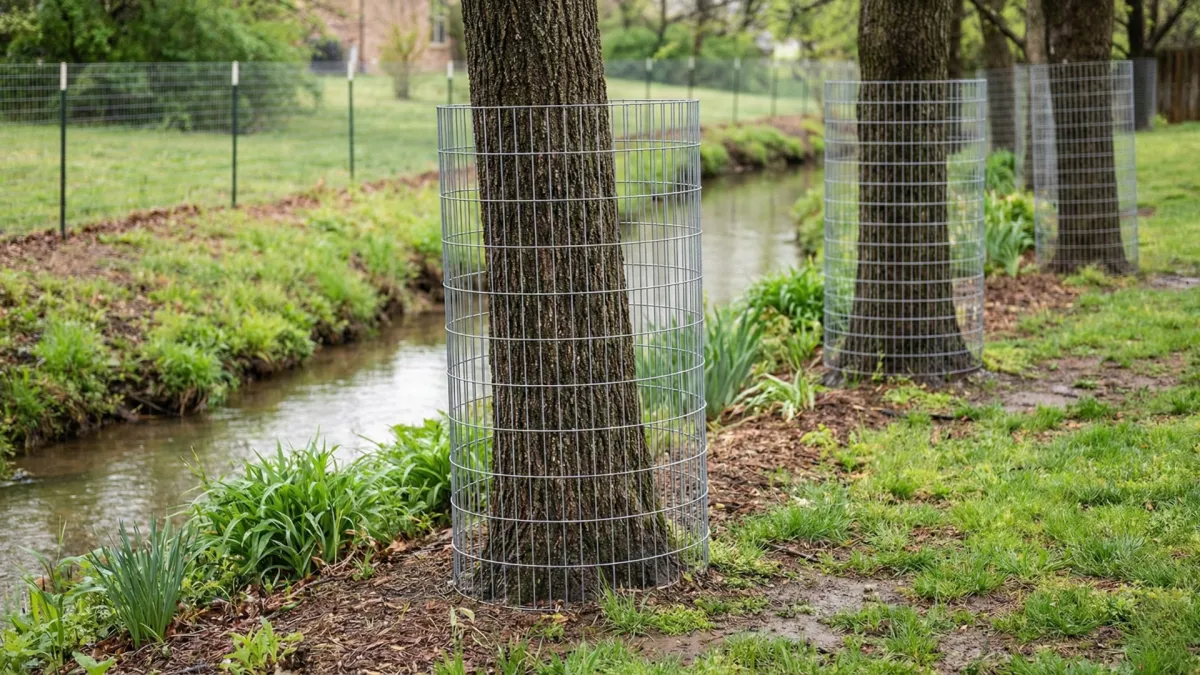
After we remove beavers, exclusion barriers stop new ones from moving in. We install heavy wire fencing along streambanks and around valuable trees. Beavers cannot chew through the metal mesh, so they move to easier food sources elsewhere.
Tree guards wrap around trunks up to four feet high. This stops beavers from cutting down ornamental trees, fruit trees, or shade trees you want to protect. Properties near wooded creeks in Pleasant Grove see repeat beaver activity without these barriers in place, presenting similar wildlife removal challenges to those faced with raccoons and other animals.
We remember installing tree guards around a customer's prized Japanese maples. She'd planted them 15 years earlier and was
devastated when beavers took down two in a single night. The guards we installed saved the remaining three trees, and they're still standing today. She sends us a Christmas card every year with a photo of those maples.
Fencing also stops beavers from rebuilding dams in the same spots. We anchor barriers deep enough that beavers cannot dig under them. You avoid the cycle of repeated flooding and removal costs. Exclusion work lasts for years with little upkeep, giving you long-term protection.
The upfront cost of exclusion always surprises people, but we explain it this way: you can pay for removal every year when new beavers move in, or you can invest once in barriers that last a decade or more. Every client who's chosen exclusion has thanked us later. One farm manager calculated he saved over $8,000 in repeated removal costs over five years.
Regular Inspections Detect New Beaver Activity Before Flooding Starts
Scheduled inspections catch beaver problems early. We check for fresh wood chips, chewed trees, mud slides, and small dam starts along your creeks and ponds. Spotting these signs before a full dam forms saves you money and stops flooding damage.
Fall and spring are peak beaver building seasons in Arkansas. Beavers work fast during these months to prepare lodges for winter or raise young. Property managers, HOAs, and rural landowners on properties across Northwest Arkansas use our inspection service to stay ahead of new activity.
The seasonal pattern is predictable. Every September, our phone starts ringing more frequently with beaver calls. Beavers know winter's coming, and they work around the clock building and fortifying dams. We've seen beaver families construct a 30-foot dam in under two weeks during fall prep season. Their work ethic is genuinely impressive—exhausting for us, but impressive.
Early removal is faster and cheaper than waiting until water backs up onto your land. We can trap one or two beavers in days, but big colonies take longer and cause more destruction. Regular monitoring gives you peace of mind and protects your investment year-round.
One HOA we work with schedules quarterly inspections for their retention ponds and creek areas. In three years, we've caught four separate beaver families before any significant damage occurred. The HOA president told us the inspection program has saved them an estimated $15,000 in emergency repairs and flood mitigation. Smart communities plan ahead.
How do you get rid of beavers in Rogers, Arkansas?
Look for beaver signs: dams, chewed trees, lodges near creeks or ponds in Rogers
Contact a licensed Arkansas pest control service for inspection
Set live traps near active trails and feeding areas
Move trapped beavers to approved zones per Arkansas Game & Fish rules
Remove dams by hand or equipment to restore water flow
Install exclusion fencing and tree wraps to stop beavers from returning
Our personal checklist also includes checking your property at dusk—that's when beavers are most active. If you hear that distinctive tail slap on water, you've got active beavers nearby. Also, look for V-shaped wakes in your pond or creek. Beavers swim differently than other animals, and once you know what to look for, they're easy to spot.
Our Wildlife Removal Process

Wildlife Inspection
Our certified technicians thoroughly inspect your attic, crawlspace, and exterior to locate entry points, droppings, and signs of wildlife activity. This detailed assessment is the foundation for a customized removal plan tailored to your property.
Trapping & Removal
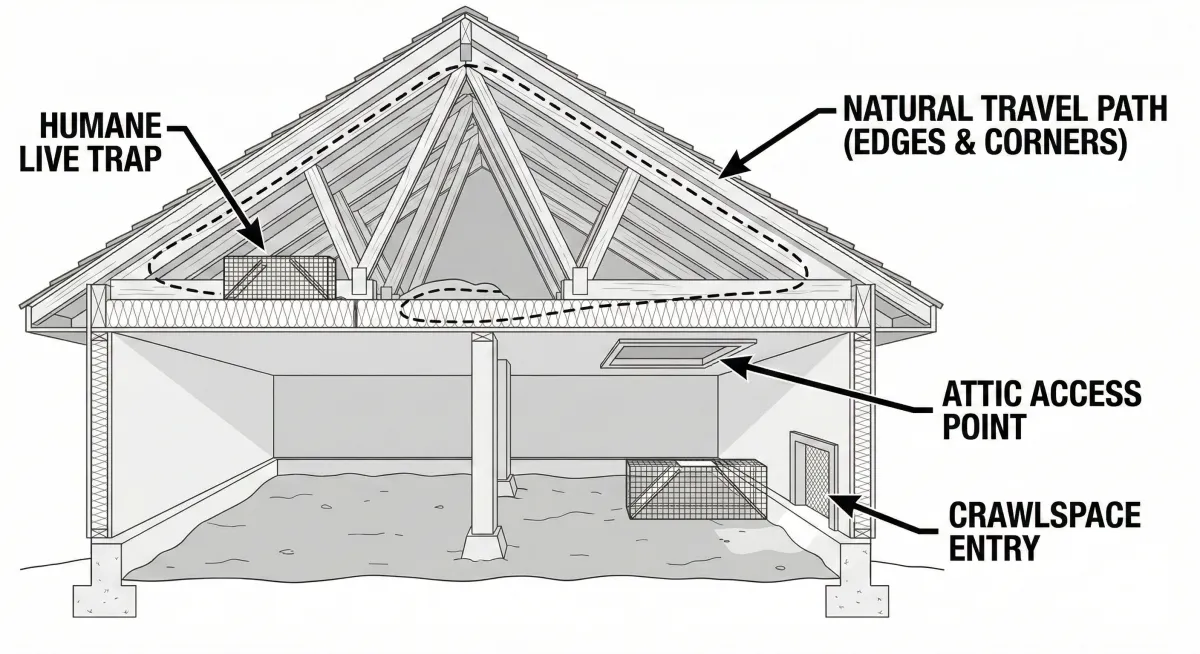
We place humane live traps along natural travel paths — edges, corners, and key access points — where wildlife is most active. Our team monitors traps daily and safely relocates animals to suitable habitats, ensuring a humane and effective process.
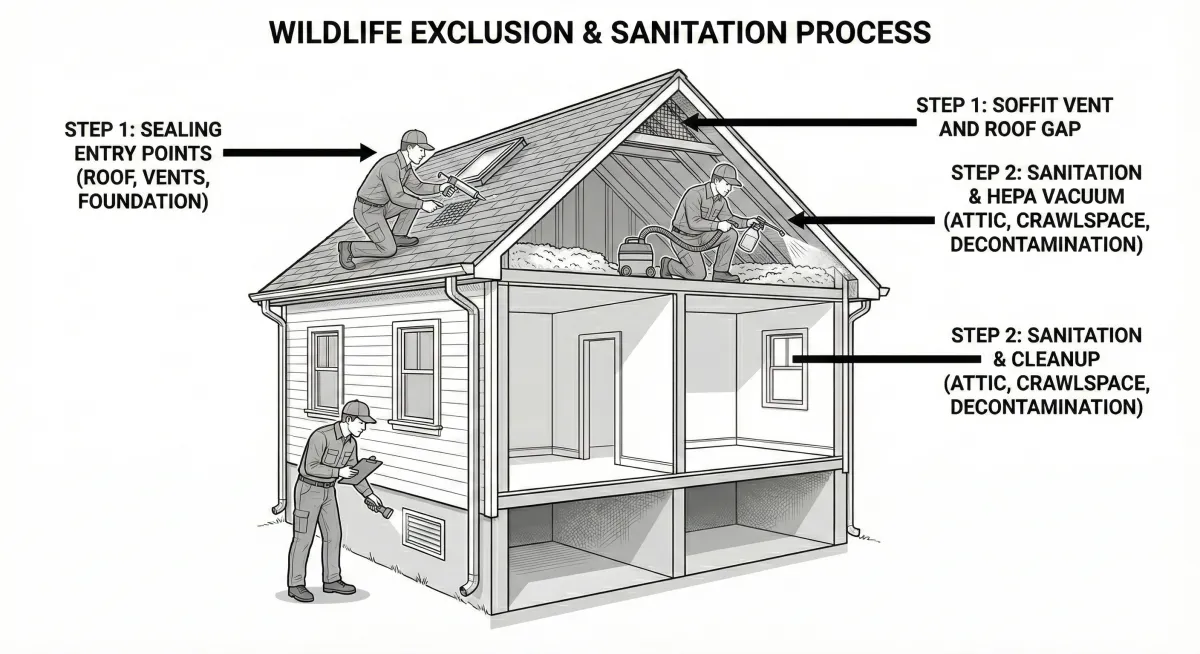
Sealing & Sanitation
Once wildlife is removed, we seal every entry point — soffit gaps, gable vents, foundation cracks, and garage thresholds — to prevent re-entry. Then we sanitize affected areas with HEPA vacuuming, disinfectant application, and deodorizing treatments to restore your home to a safe, clean condition.
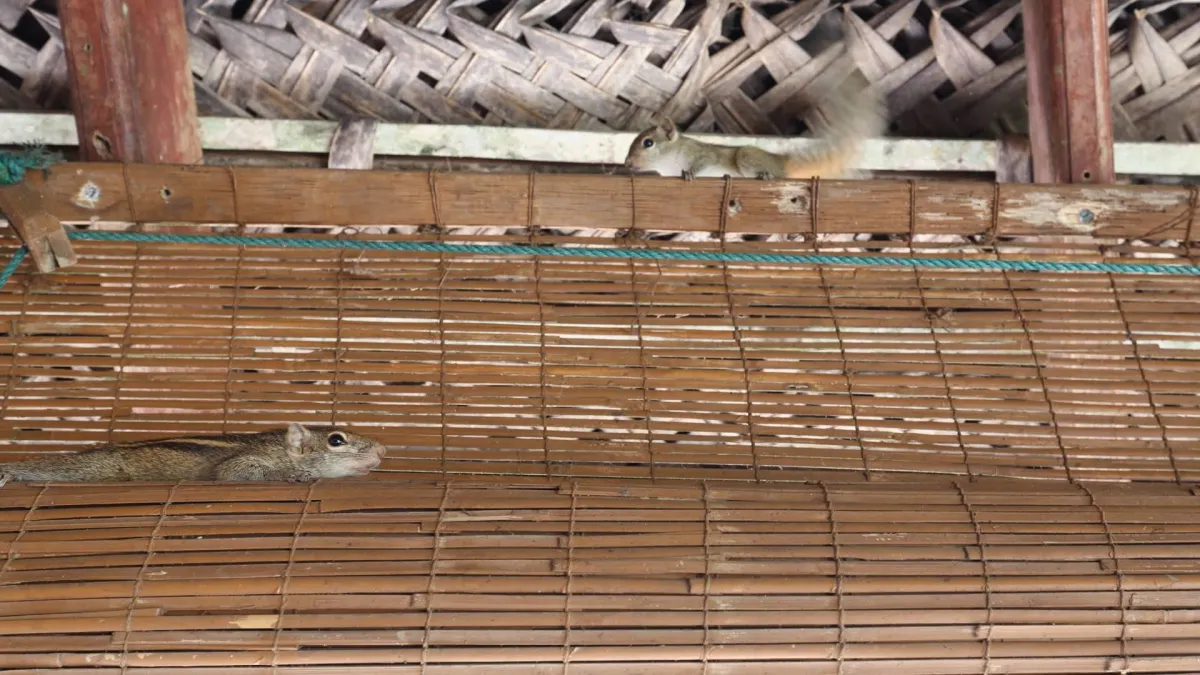
Squirrels
The acrobats of Northwest Arkansas, the charming and bushy-tailed squirrels! Agile climbers and expert foragers, these creatures often venture into urban areas, seeking cozy nesting spots. While their antics might be entertaining outdoors, their presence indoors can lead to challenges that our wildlife removal services are well-equipped to address.

Racoons
Enter the masked marauders of the night, the raccoons! With their distinctive facial markings and ringed tails, these clever creatures are frequent visitors in our urban landscapes. Raccoons, though charming from a distance, can become unwelcome guests in your attic or crawlspace. Let our wildlife removal experts ensure a humane eviction and secure your space from these nocturnal adventurers.
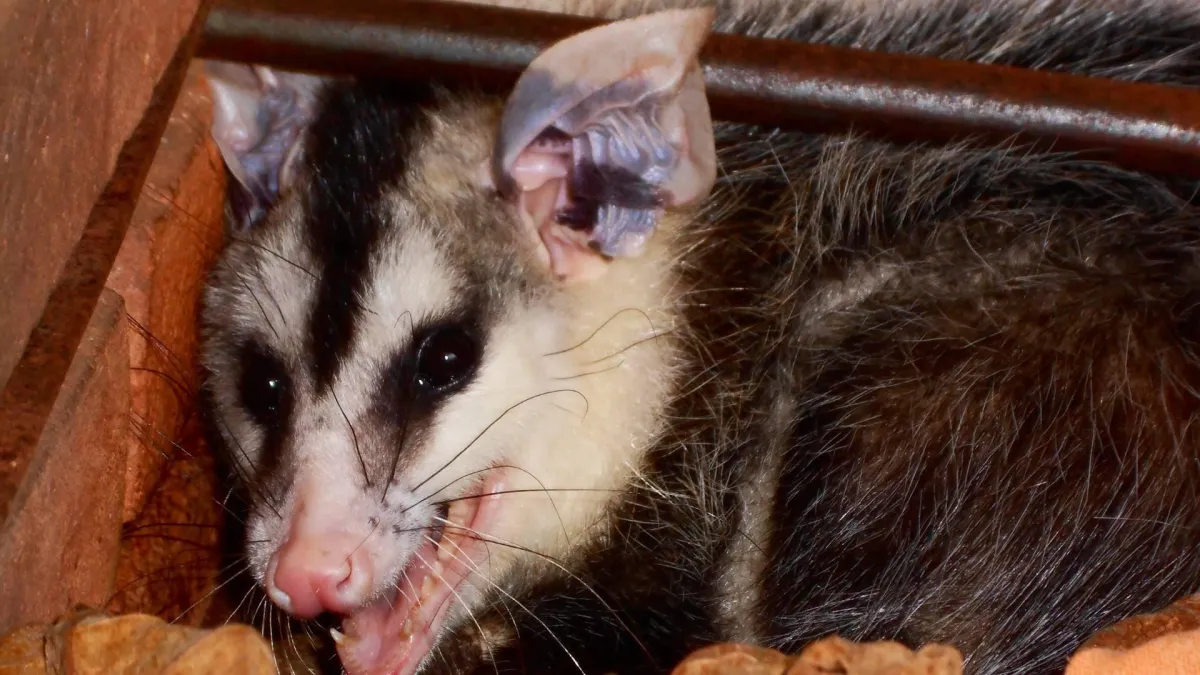
Opossums
With their unique prehensile tails and ability to play possum when threatened, these creatures are adaptable and can find their way into various spaces. Our wildlife removal services are designed to address the challenges posed by opossums, providing a safe and effective resolution.

Rats
Small but persistent rodents that may attempt to set up residence in your space – rats! These quick and nimble creatures can squeeze through surprisingly small openings. Our wildlife removal services focus on efficient trapping and exclusion to prevent these disease-carrying rodents from becoming unwanted roommates.
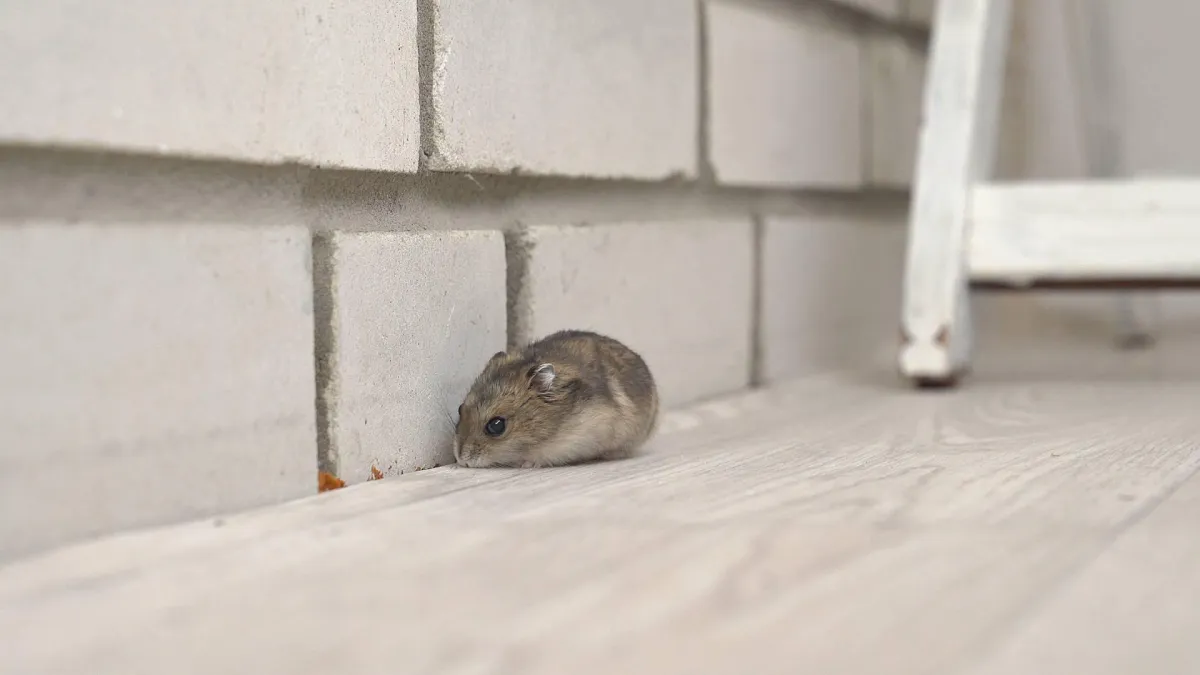
Mice
With their keen sense of smell and ability to reproduce rapidly, mice can become a nuisance in no time. Our wildlife removal services address these pint-sized intruders, ensuring a swift and effective resolution to keep your home or business mouse-free.
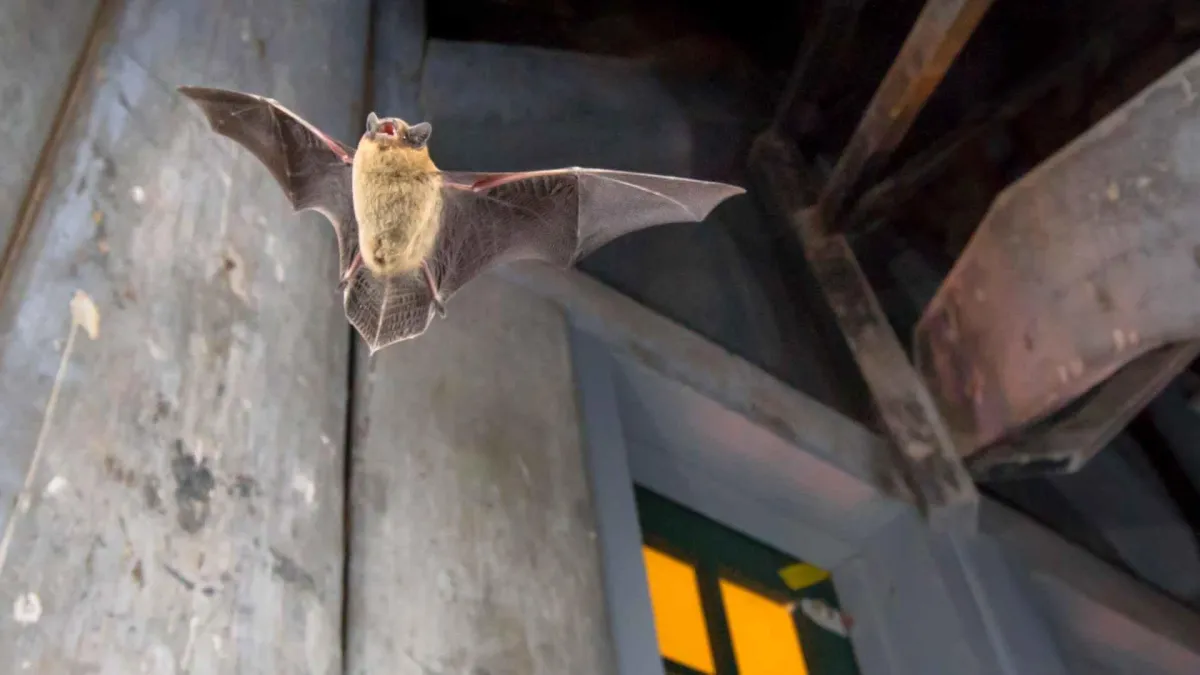
Bat
Bats, while beneficial for the ecosystem, can become unwelcome guests in your home or business. With their ability to roost in attics, chimneys, and other secluded areas, bats can pose health risks and cause significant damage. Our professional bat removal services are designed to safely and humanely evict these nocturnal intruders. We employ advanced techniques and preventive measures to ensure your property remains bat-free, giving you peace of mind and a secure environment.
Frequently Asked Questions
Who is allowed to remove beavers in Rogers, Arkansas?
Licensed pest control or wildlife removal services with Arkansas Game & Fish permits are allowed to remove beavers in Rogers. Arkansas law requires permits for trapping and moving certain wildlife. Homeowners who try removal without proper licensing risk fines and legal penalties.
We've seen the fines for illegal beaver removal, and they're steep—sometimes over $1,000 per animal.
Game wardens take wildlife violations seriously in Arkansas. One landowner we consulted with had already trapped two beavers illegally before calling us. We helped him navigate the situation with Game & Fish, but he still paid substantial penalties. Don't risk it.
Why do beavers cause flooding on Rogers properties?
Beavers build dams across creeks to make ponds for their lodges and protection. These dams block natural drainage and back water onto yards, roads, and fields. Rogers properties near streams feeding Beaver Lake get the most flooding when dams stop water flow during heavy rains.
Think of it from the beaver's perspective: a dam creates a protective moat around their lodge, makes deep water for storing food underwater during winter, and creates safe travel routes. It's brilliant survival strategy—just terrible for property owners downstream.
How long does beaver removal take in Rogers?
Most beaver trapping is done in 3–7 days, depending on beaver count and property size. Single beavers are caught quickly, while big groups with many animals take longer. Dam removal happens within one day once trapping finishes.
The fastest removal we've completed was a single beaver caught overnight. The longest took three weeks for a colony of nine beavers spread across multiple dam sites. Patience matters with wildlife work. We never rush the process because stressed animals become dangerous animals.
What keeps beavers from coming back after removal?
Exclusion fencing, tree guards, and dam removal get rid of food sources and building sites that attract beavers. Heavy wire barriers along streambanks and around trees block access permanently. Without these protections, new beavers often move into empty territory within months.
Here's the reality: if you don't install exclusion measures, you're just creating vacant real estate for the next beaver family. We've had customers call us back six months after removal because new beavers moved in. When they finally invested in fencing, the problem ended permanently.
Are beaver bites dangerous in Arkansas?
Yes, beaver bites are dangerous because beavers carry bacteria and pose a rabies risk. Their teeth cut through bone and cause deep wounds that need medical treatment. Never approach a beaver and call a professional wildlife removal service right away if you see one on your property.
We've watched a beaver bite clean through a two-inch diameter branch in one chomp. Those same teeth can sever fingers or cause crushing injuries to hands and arms. Rabies cases in beavers are rare in Arkansas, but the bacterial infections from bites are almost guaranteed without immediate medical care. Not worth the gamble.
Do beavers stay year-round in Rogers?
Yes, beavers stay in the same territory year-round unless removed or their habitat is destroyed. They do not hibernate and stay active through Arkansas winters. Once beavers make a lodge and dam, they defend that area from other beavers.
We've tracked beaver activity through January snow and watched them swimming under ice to reach their food caches. They're remarkably adapted to year-round survival. One beaver family we monitored stayed in the same half-mile creek section for four consecutive years before the landowner requested removal. They're loyal to their territory, which makes exclusion so important—you're not just preventing this year's beavers from returning, but potentially decades of future occupation.
Customer Reviews
At Network Pest Control, we take immense pride in our commitment to customer satisfaction and providing personalized pest control solutions. Our dedicated team understands that every customer and pest problem is unique, which is why we go the extra mile to ensure that each issue is completely resolved.
When you choose Network Pest Control, you can expect a thorough assessment of your pest problem, where our experts analyze the extent of the infestation and identify the underlying causes. We then tailor a customized solution that addresses your specific needs, taking into account factors such as the type of pests, the size of the affected area, and your preferences.
YOU DESERVE A PEST-FREE
ENVIRONMENT
Immediate services available
Licensed technicians
If the bugs come back, so do we!
Request a FREE Estimate
COMPANY STORY
& EXPERIENCE
Craig Broadhead started his pest business in 2004 in California, called Pacific Pest Control. In 2021, he sold his business and moved his family to Arkansas to start fresh with a new vision of Network Pest Control. His goal it to make sure each customer has the best experience possible.

Network Pest Control
11205 Meadow Lark Rd. Rogers AR 72756
479.888.4249